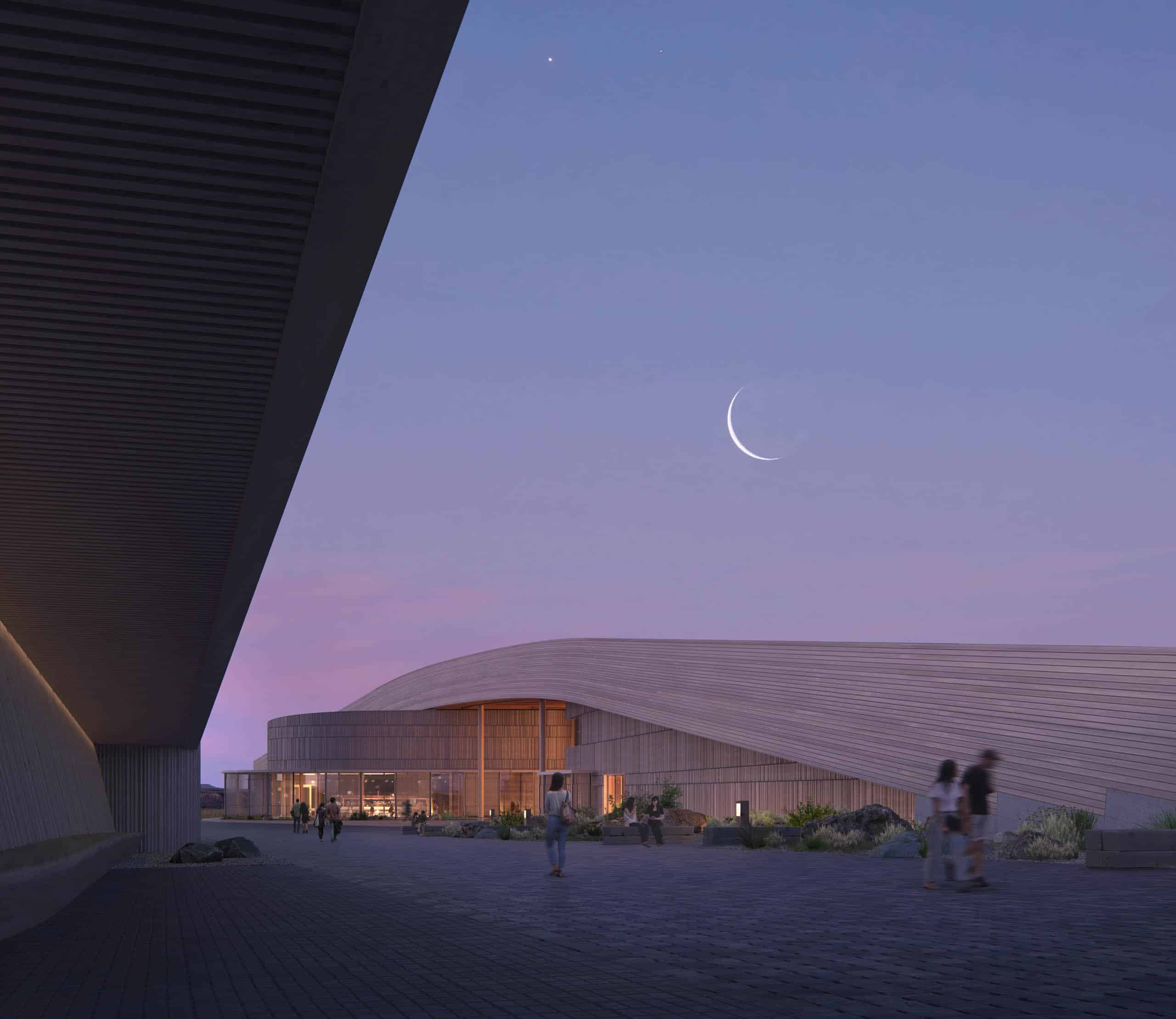
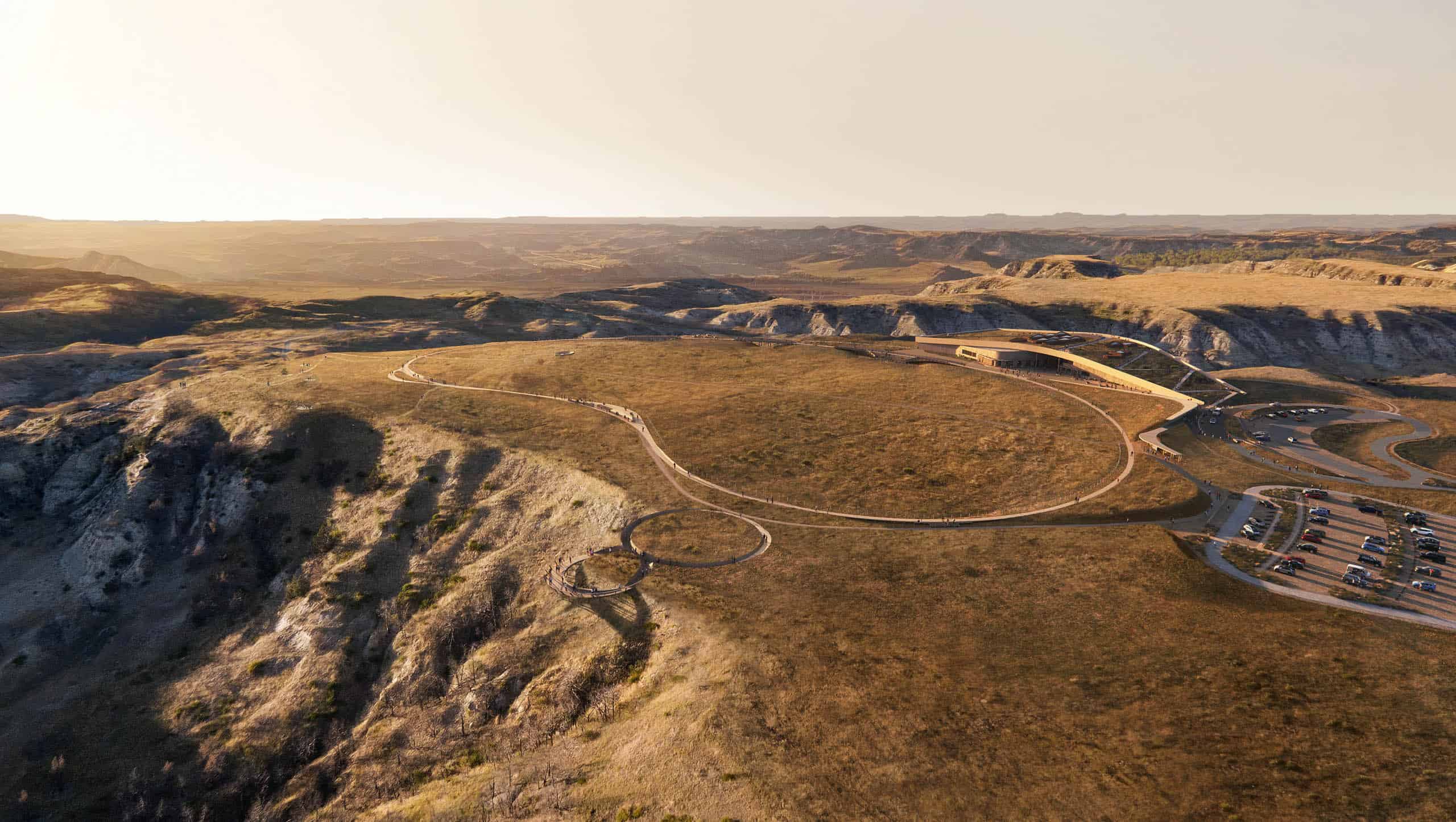
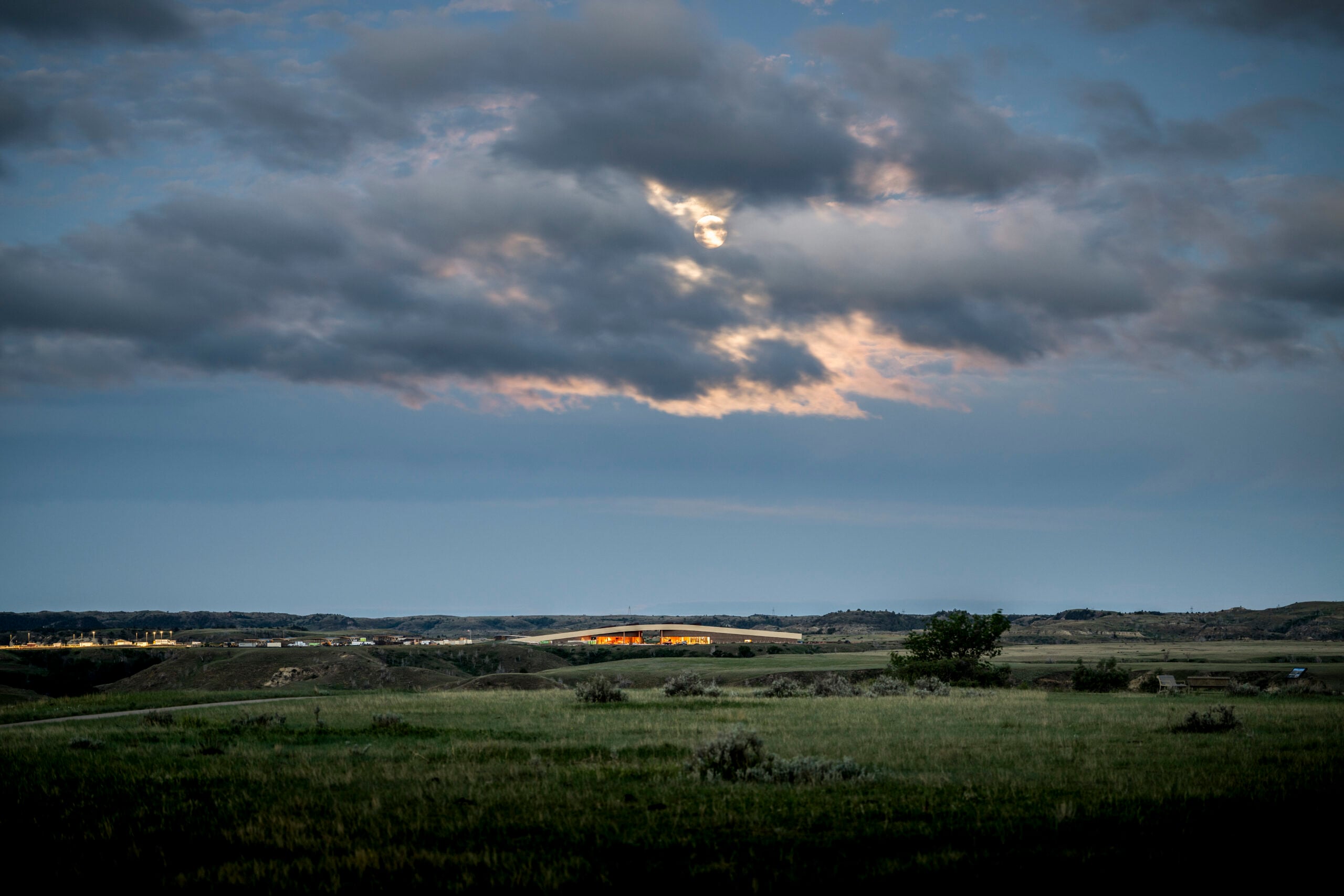
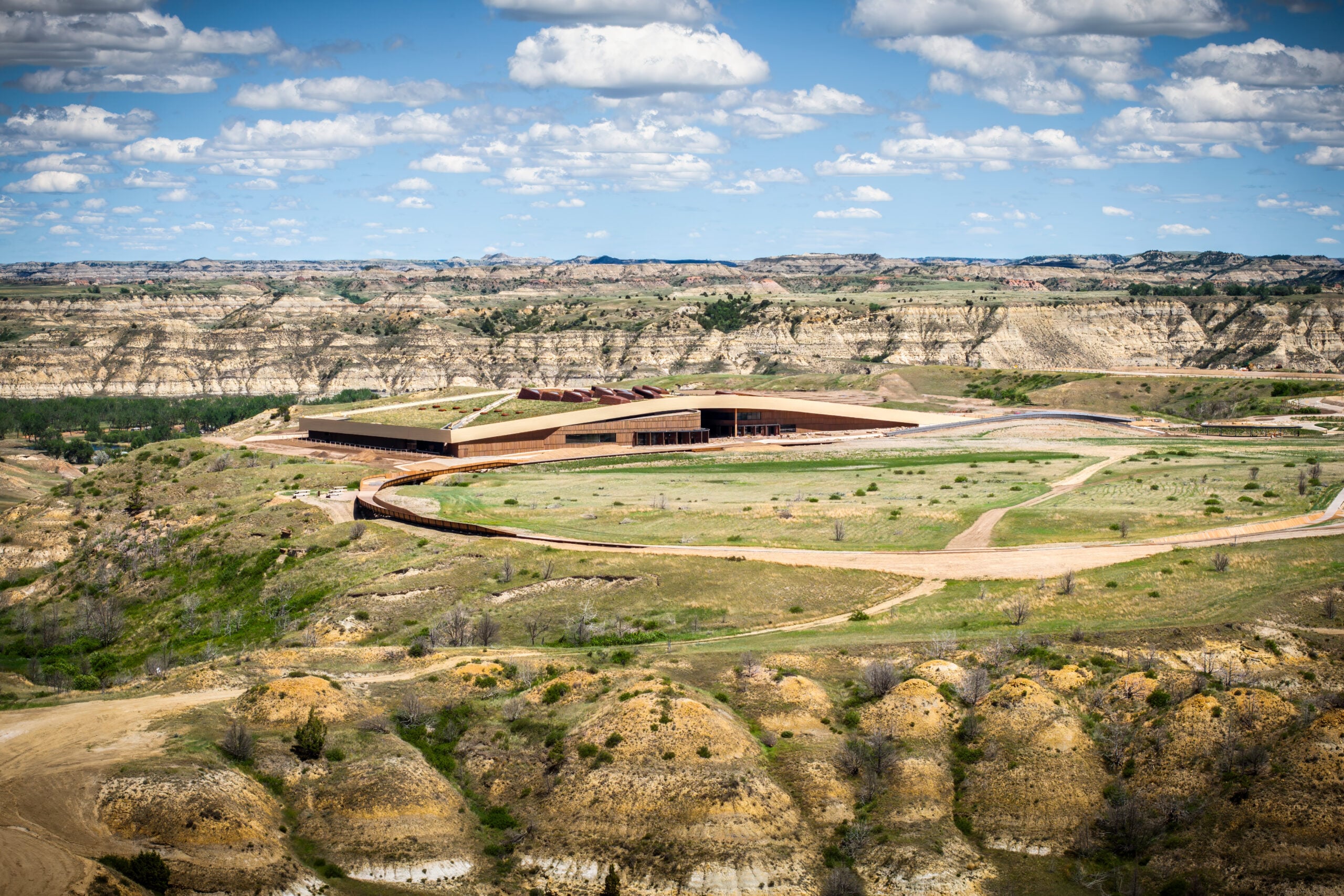
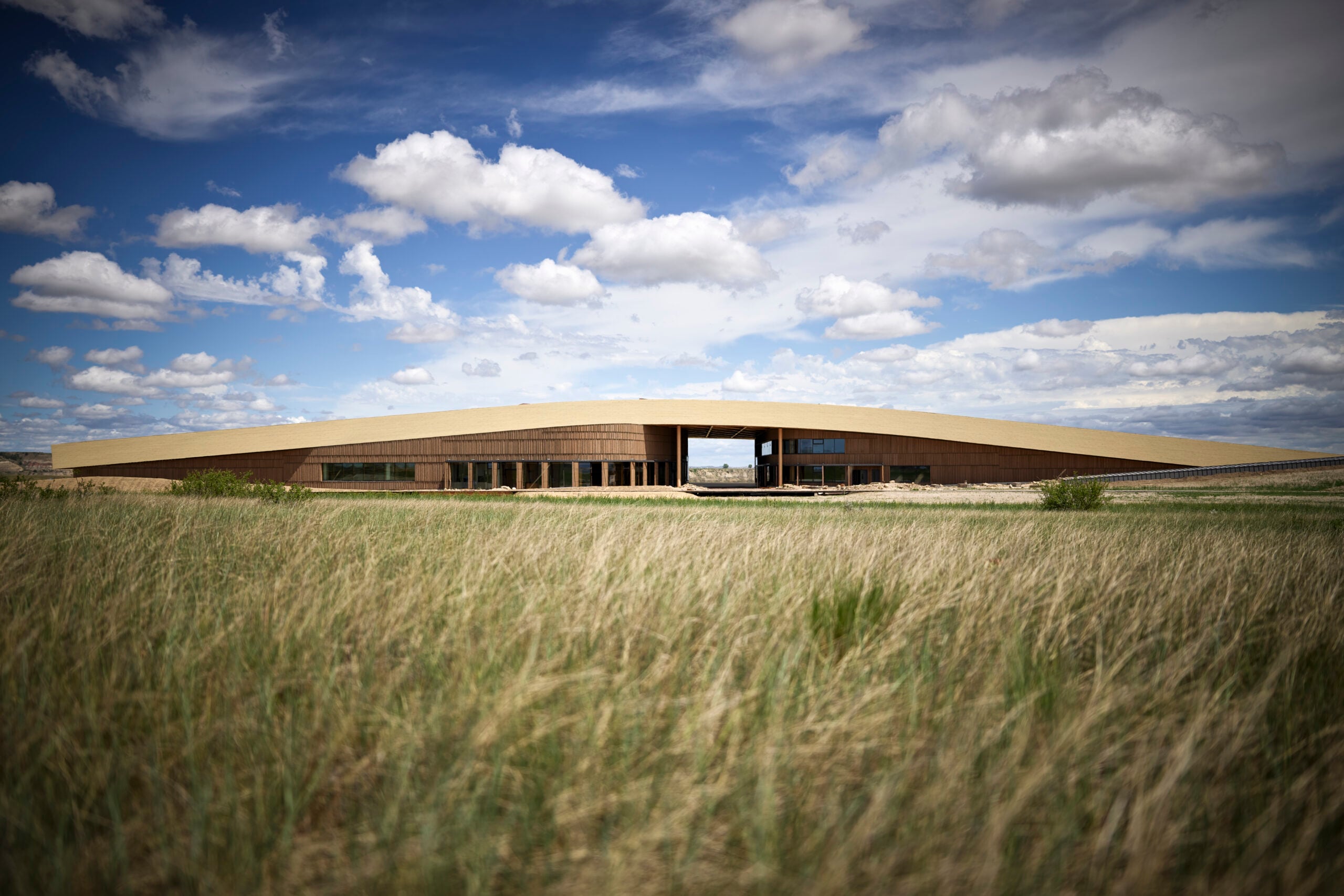
JE Dunn Construction is nearing completion of the Theodore Roosevelt Presidential Library in Medora, North Dakota, a 96,000-square-foot cultural destination opening July 4, 2026, on America’s 250th birthday. Designed by Snøhetta, with JLG Architects as architect of record, the project is being delivered through Construction Management at Risk for the Theodore Roosevelt Presidential Library Foundation on more than 90 acres overlooking the Badlands.
Conceived as a next-generation presidential library and cultural destination, the Theodore Roosevelt Presidential Library connects Theodore Roosevelt’s conservation legacy with leadership, citizenship, and an immersive visitor experience rooted in the landscape that shaped him. From the earliest planning, the project team set out to create a building that would both honor the past and push the boundaries of what a regenerative, high-performance civic landmark can be.
Building in the Badlands
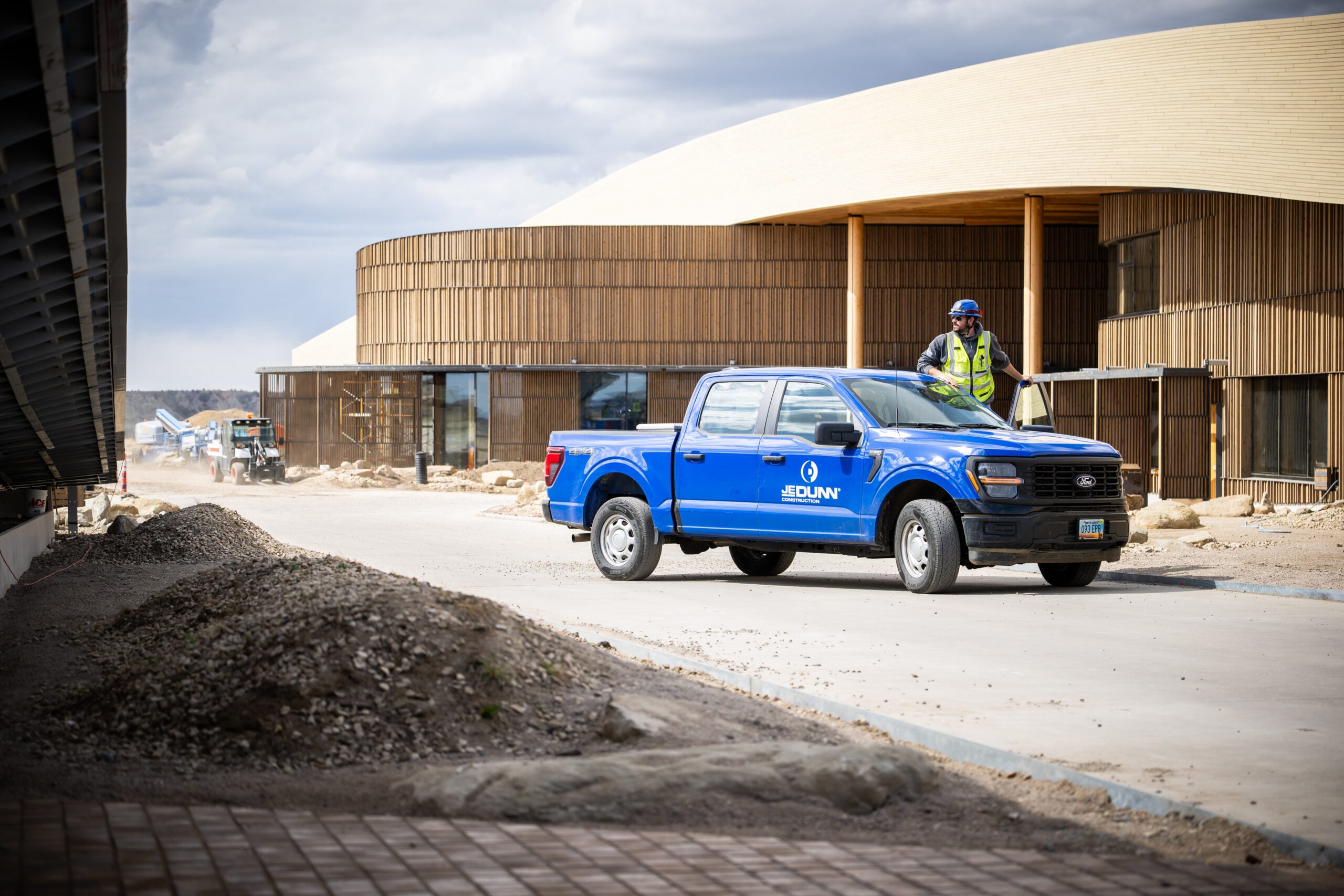
Bringing a project of this complexity to life in the North Dakota Badlands required a different approach to planning, access, and logistics. Remote conditions, variable weather, and the need to protect the sensitive surrounding landscape made every phase of work more intricate, from material transport to trade sequencing.
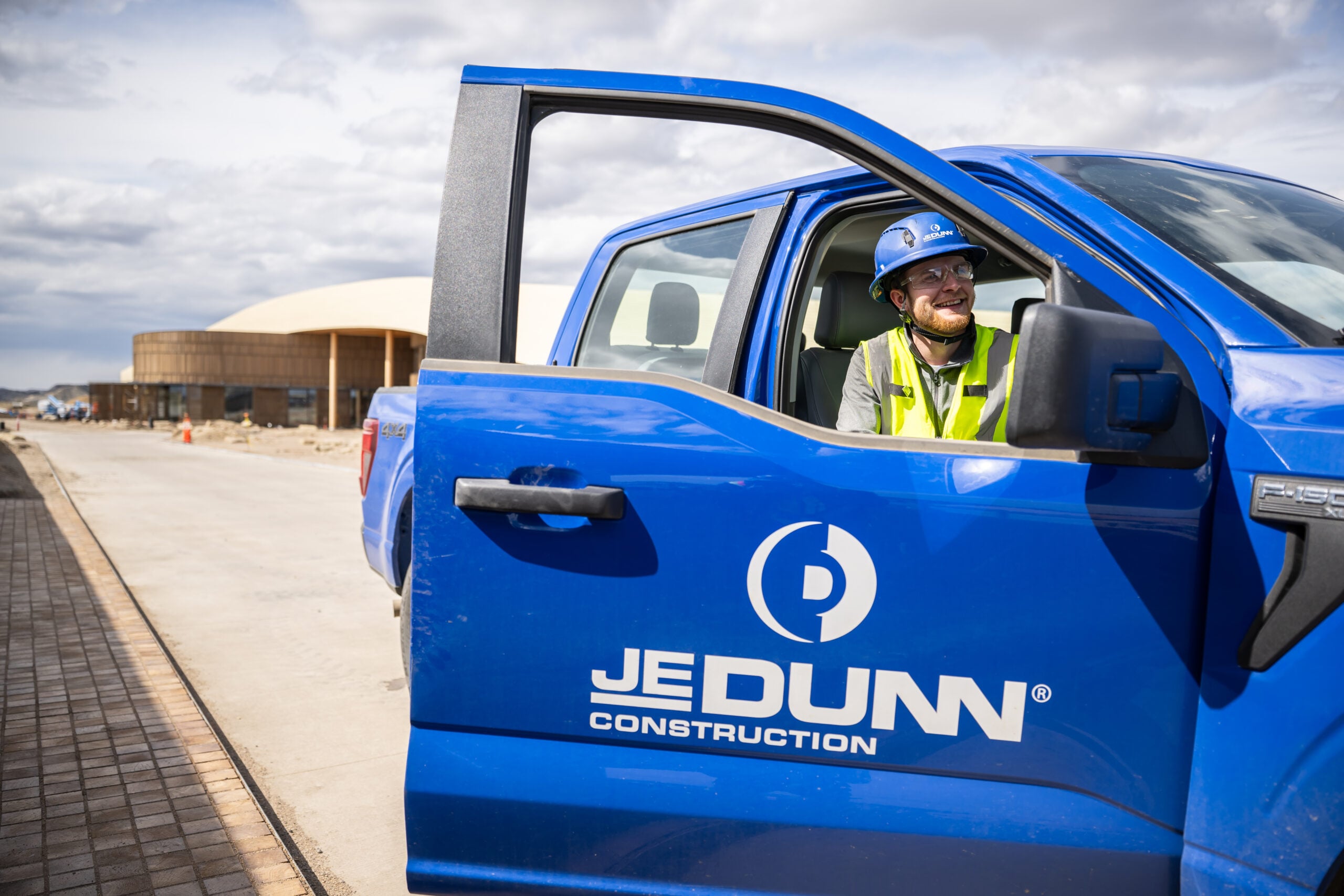
“Nobody could point to a playbook for this project,” said Marc Mellmer, Vice President & North Dakota Office Leader at JE Dunn. “We were asking our teams, our trades, and our suppliers to solve challenges none of us had tackled before, which meant collaboration was required from day one.”
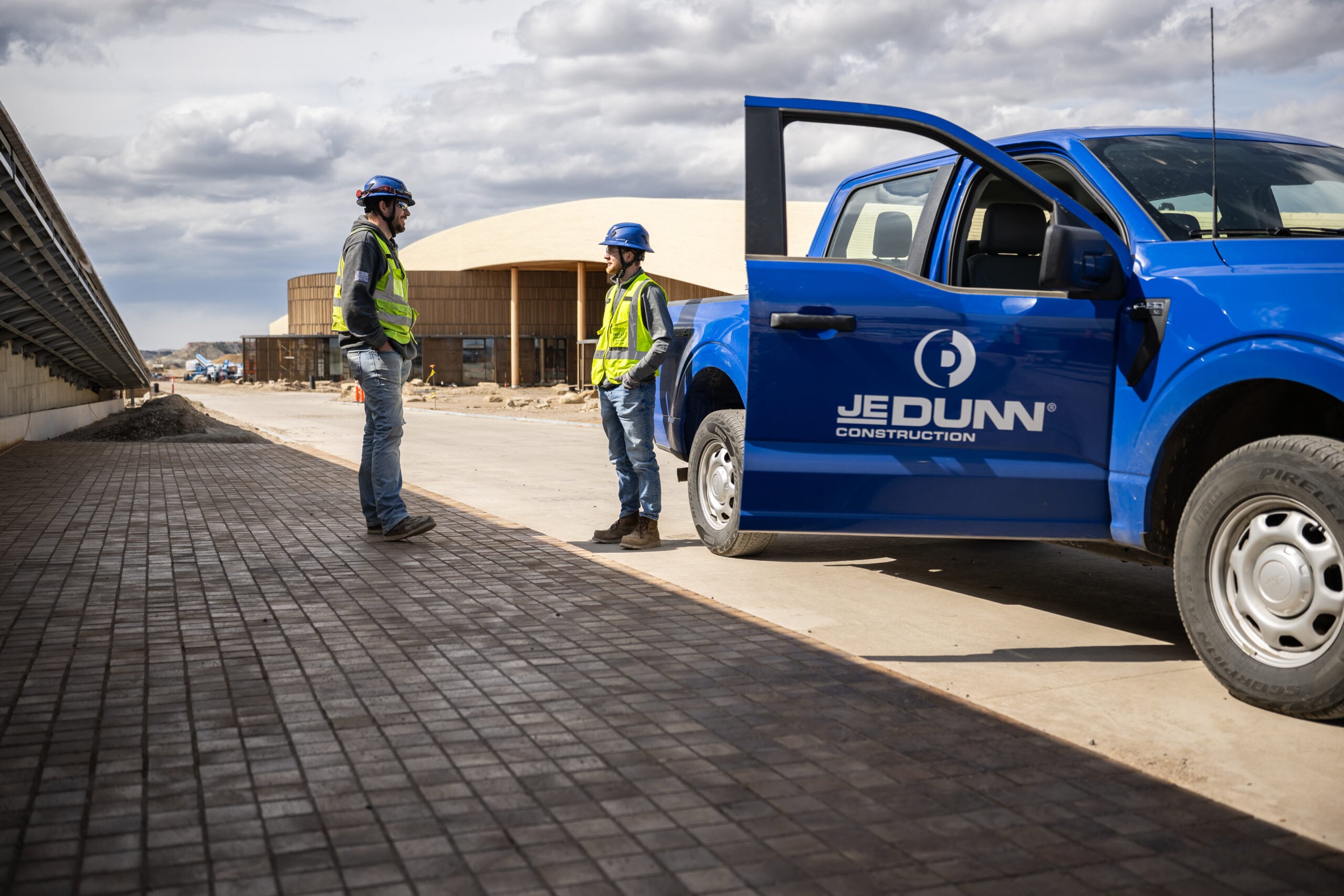
For the field team, the site itself became a central stakeholder. “Working in the Badlands presents unique challenges for access, phasing, and safety; our team has treated the site itself as a critical project stakeholder,” said Steve Fore, JE Dunn General Superintendent for the project. “We’re not just preserving history here; we’re building history for someone else to preserve.”
A mass timber and rammed earth landmark
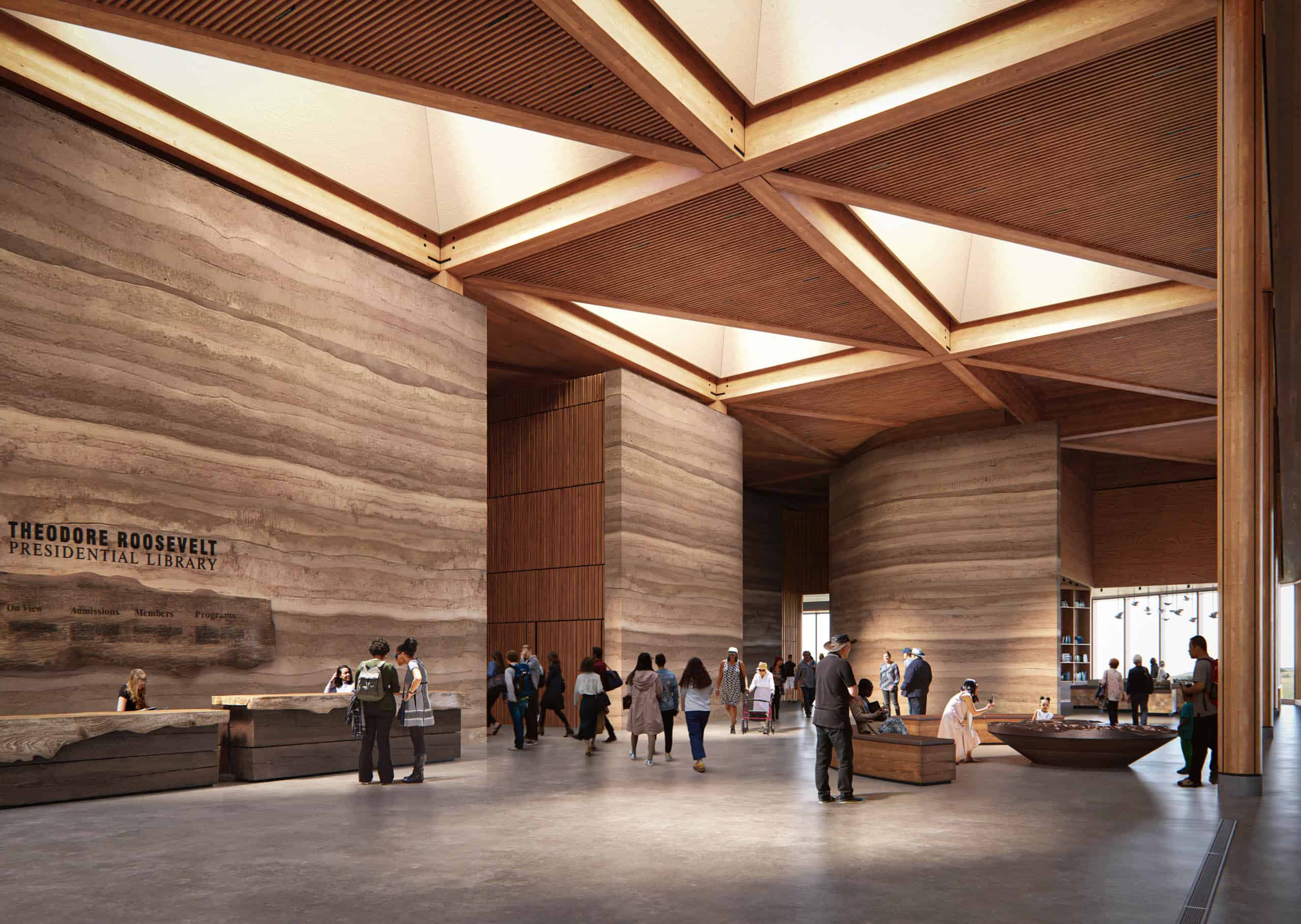
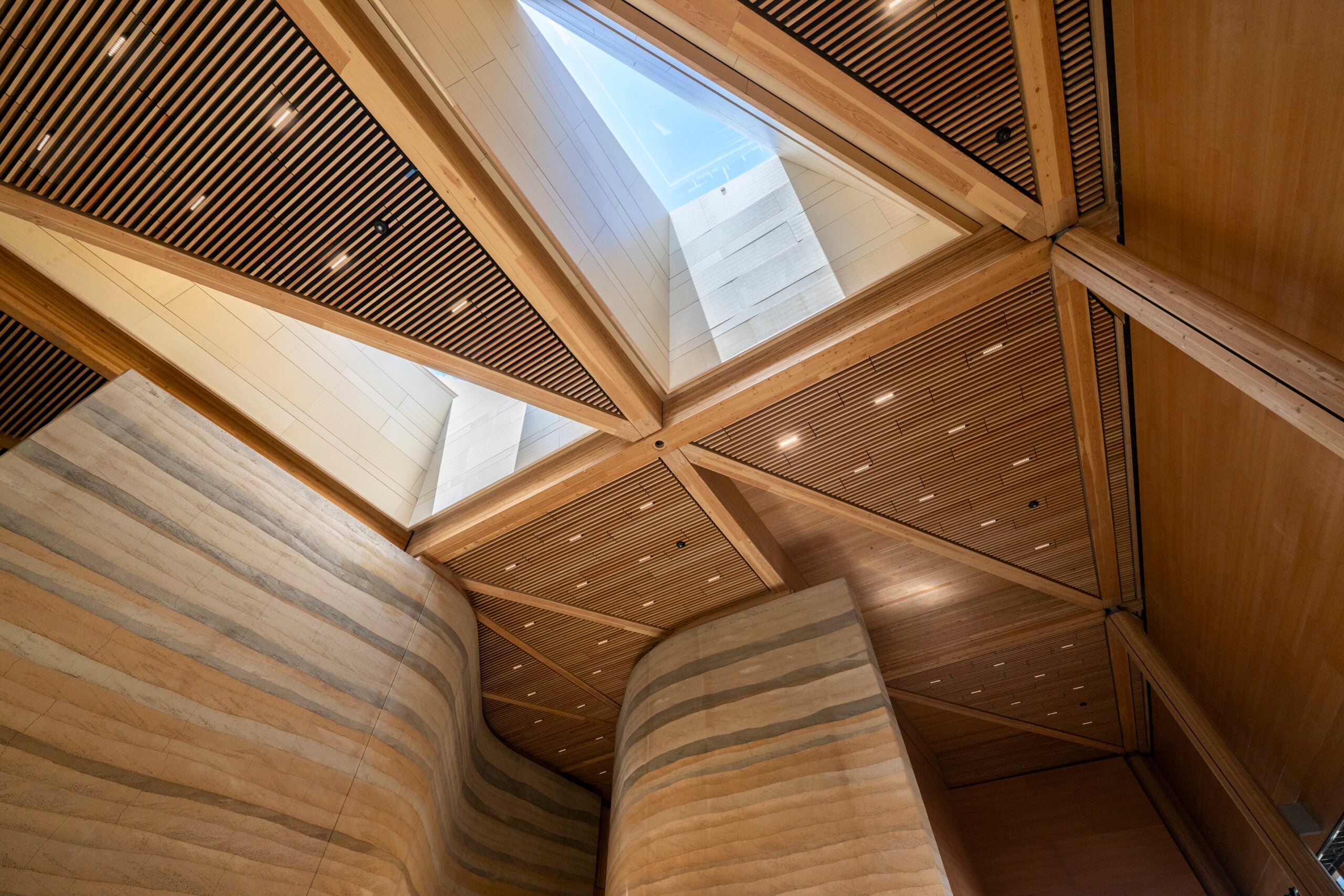
At the heart of the Theodore Roosevelt Presidential Library is a mass timber structural system that supports both the architectural vision and the project’s aggressive sustainability goals, making it the largest mass timber undertaking in North Dakota to date. The building’s glulam and cross-laminated timber roof system is topped with concrete, insulation, and native prairie planting, forming part of a 2-acre walkable green roof that overlooks the surrounding landscape.
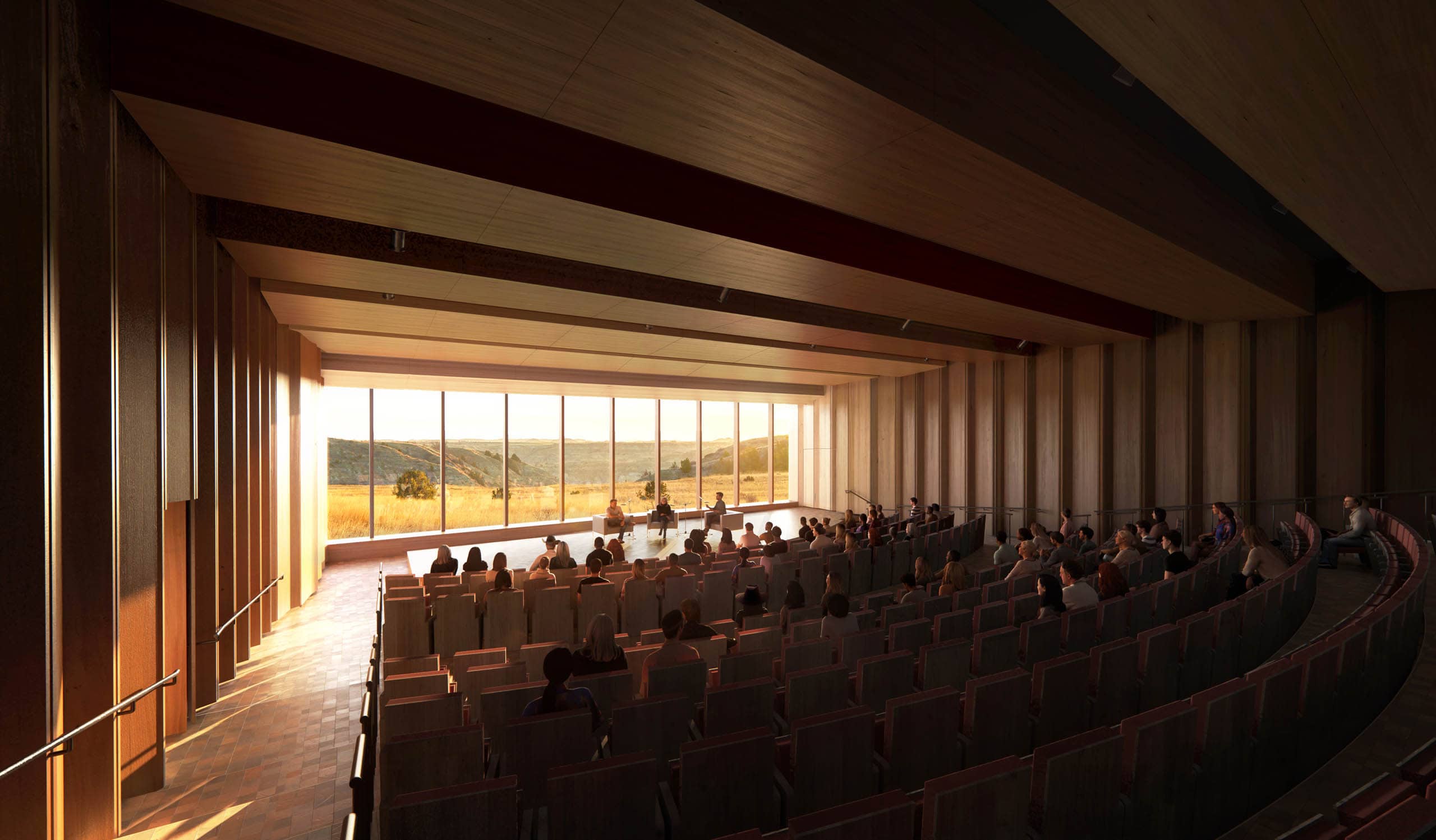
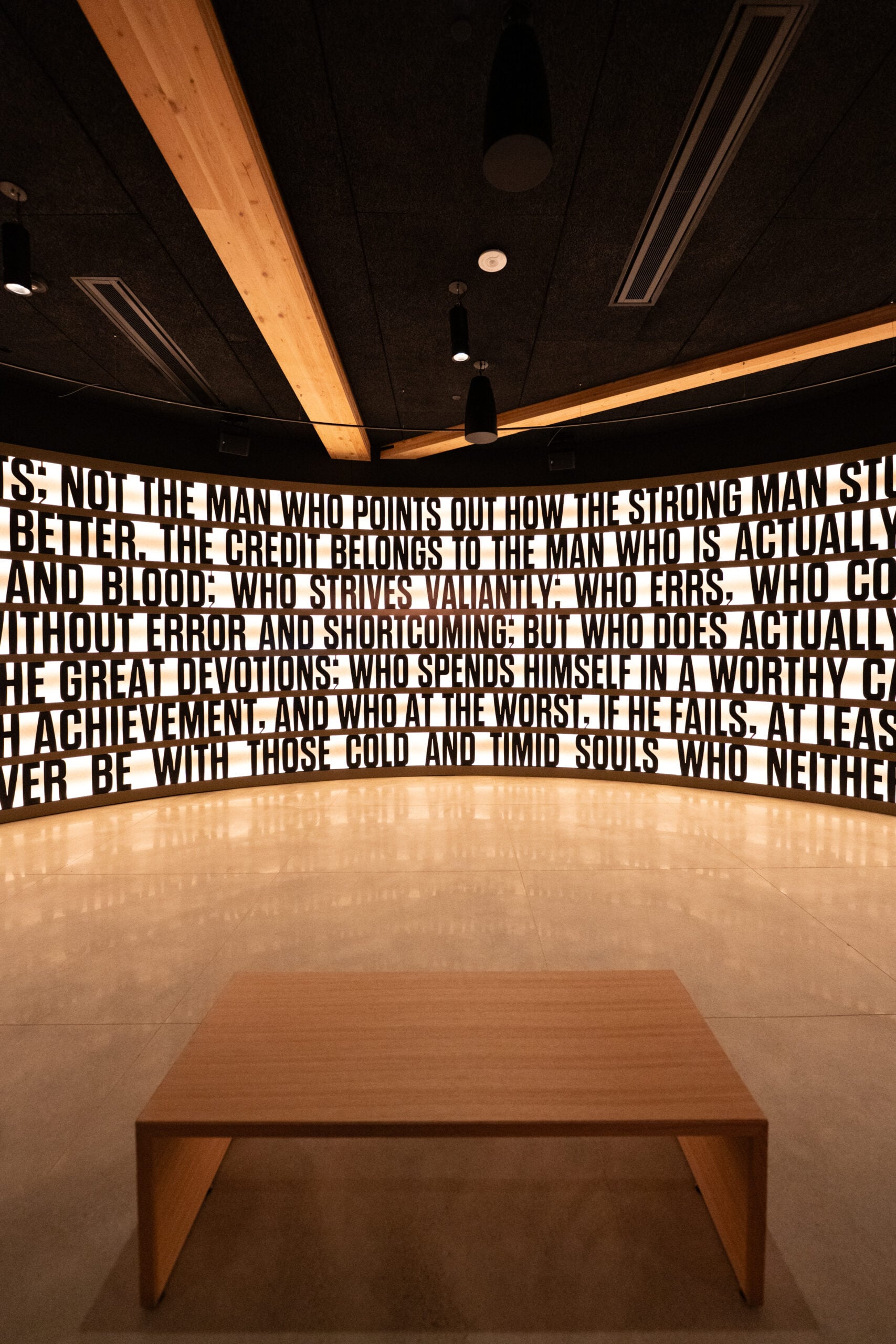
Inside, approximately 40,000 square feet of exhibit space and a 300-seat auditorium will host immersive experiences, programs, and events that interpret Roosevelt’s life and legacy. The building envelope features FSC-certified wood rainscreen and curtainwall systems, nine triangular and three trapezoidal skylights designed to optimize seasonal daylighting, and a prefabricated exterior skin system manufactured in Kansas City by Form Off-Site Solutions.
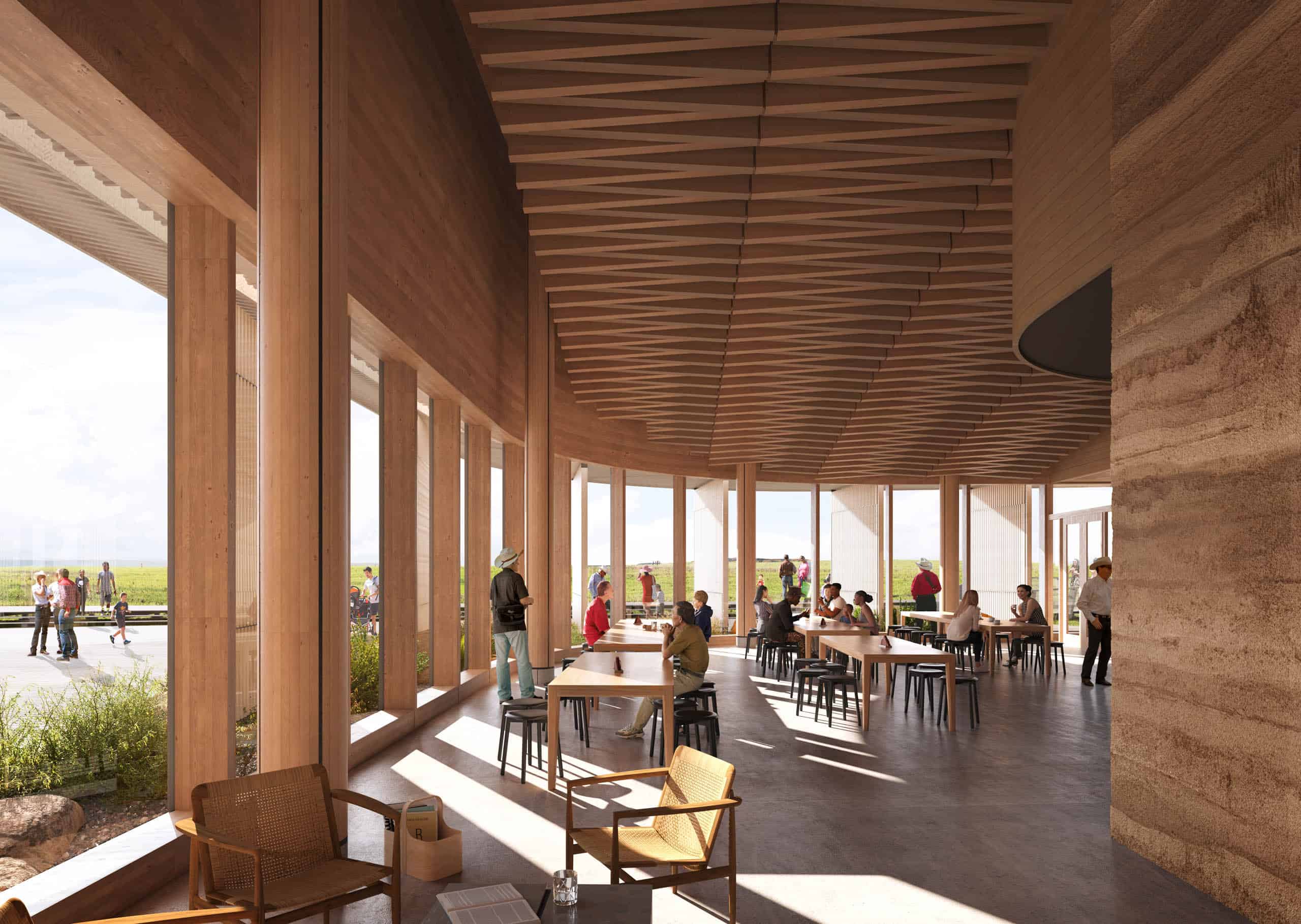
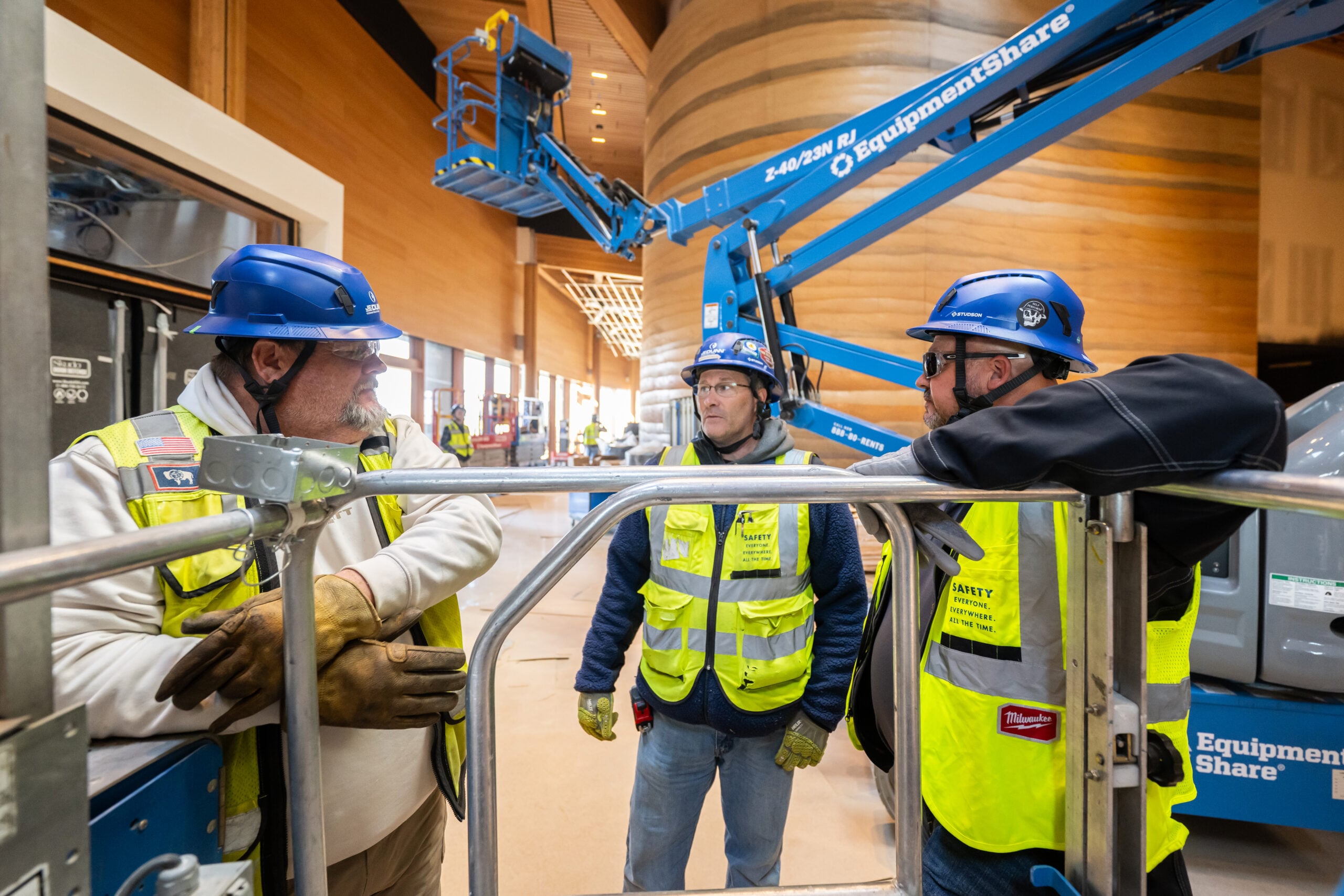
One of the library’s most striking elements is North America’s first curved rammed earth structure: an approximately 30-foot-tall, 240-foot-long centerpiece that anchors the main hall. Combined with low-carbon concrete and extensive material vetting, these systems helped reduce embodied carbon and bring the design’s material story to the forefront.
Pursuing Living Building Challenge, LEED Platinum, and SITES Platinum
From the outset, the project team embraced a holistic view of building performance and resource use. The Theodore Roosevelt Presidential Library is pursuing Living Building Challenge Living Certification, LEED Platinum, and SITES Platinum certifications.
The building is designed to align with Living Building Challenge standards, targeting net-positive energy performance, significant water reduction, and material transparency, with a long-term vision of net-zero energy, water, waste, and emissions across operations and performance. Major systems supporting those goals include a 352-kW photovoltaic array with 702 panels for on-site renewable energy, 216 geothermal wells reaching 300 feet deep for efficient heating and cooling, a high-performance building envelope, and integrated water capture and reuse strategies.
Across the project, the team undertook extensive material vetting and prioritized responsibly sourced products, making more transparent, intentional choices around sourcing, transport, and full life-cycle impacts.
Restoring a native landscape
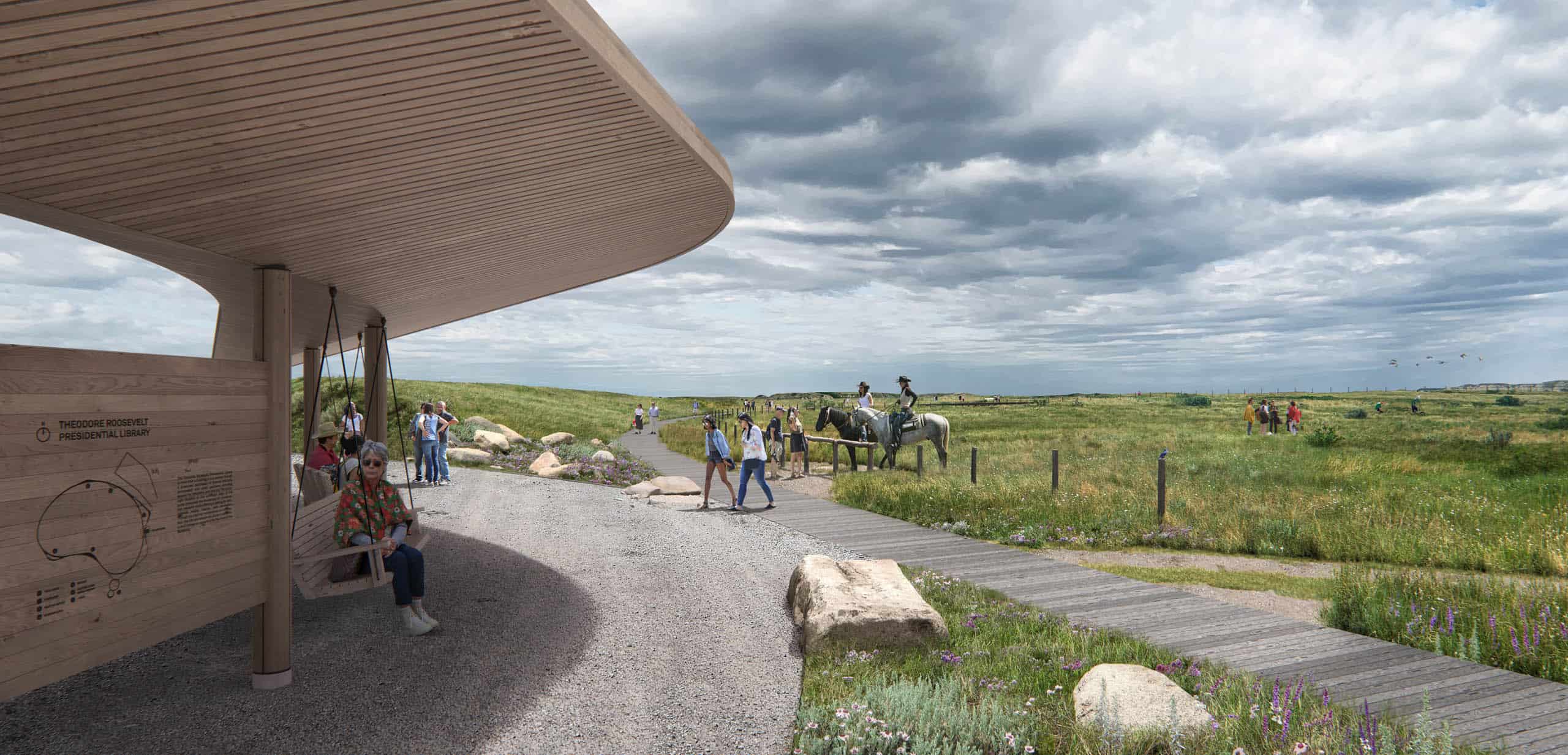
The Theodore Roosevelt Presidential Library is designed not only to sit lightly on the land, but to help restore it. The 2-acre walkable green roof and surrounding landscape incorporate approximately 4,500 cubic yards of soil and more than 140,000 native plugs, with full-site restoration including roughly 290,000 native plants representing more than 60 regional species.
These plantings were carefully selected to reflect the Badlands ecosystem, reduce irrigation demand, and increase biodiversity through regionally appropriate species. A multi-year native plant initiative in partnership with North Dakota State University and RES focused on manual seed collection and propagation, expanding the availability of regionally adapted species for future restoration efforts across the region.
The project also drove the development of a custom low-carbon concrete mix that can inform future sustainable construction in North Dakota and beyond. Project efforts are expected to influence regional practices in landscape restoration and material sourcing for years to come.
Looking ahead to opening day
On July 4, 2026, when the Theodore Roosevelt Presidential Library officially opens its doors, visitors will experience a building and landscape shaped by collaboration, experimentation, and a shared commitment to stewardship. From its mass timber structure and curved rammed earth walls to its native plantings and high-performance systems, the project reflects a broader vision: to create a place that honors Roosevelt’s legacy by inspiring future generations to lead, conserve, and explore.
As the final pieces come together, JE Dunn’s team is focused on delivering a project that lives up to that vision and stands as a benchmark for regenerative civic construction in the years ahead.