

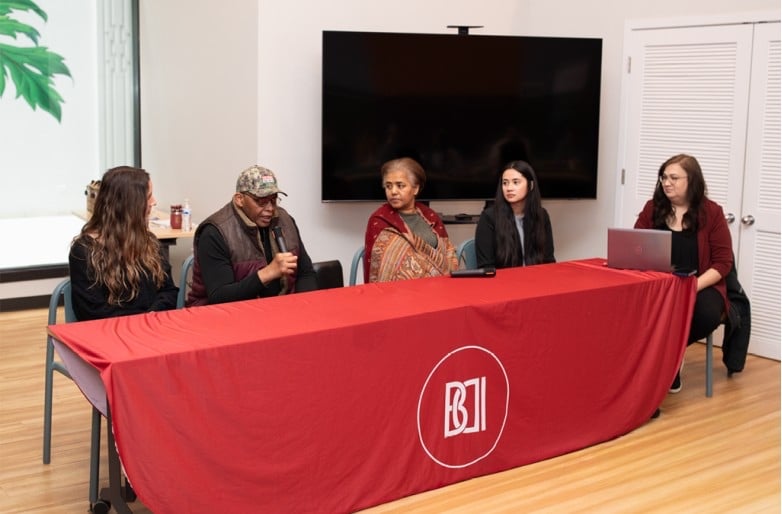


Q&A With JE Dunn’s CityFleet Maintenance Facility project team, including partners Zana Construction (MWBE) and Faison Construction (MBE)
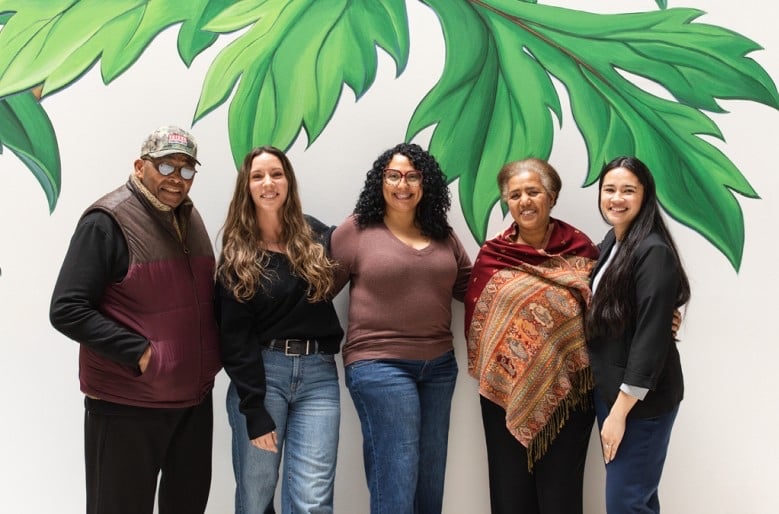
Stacey Flint, JE Dunn Vice President. Amanda Cole, JE Dunn Project Manager. Jame Faison, Owner of Faison Construction. Seyona Belai, Owner of Zana Construction. Moderated by Daphne Patrick. Pictured with Kimberly Sutton of DBI.
Teaming arrangements are any structured mentorship or capacity-building partnership between a larger firm and a smaller firm during a project. These arrangements look different across organizations and may go by different names, but the goal is the same: meaningful skills transfer and long-term growth.
Here’s what the partners of CityFleet’s Maintenance Facility construction have to say about their experience with successful teaming arrangements:
James: The most important part is having an understanding on the front end. Too many people get involved in a teaming arrangement or just start a job and don’t have a conversation on the front end about their task or what they’re going to do.
You need to have a good understanding of the project, what it does, the goal, and how to keep it on time.
Stacey: The purpose of a teaming arrangement is to build capacity in smaller businesses and ensure that there’s growth and knowledge transfer that will benefit them beyond the agreement. Through pursuit, preconstruction, construction, warranty, and after, it’s a genuine long-term partnership.
Stacey: It starts with clarity. There can be no gray area. There can and should be flexibility, yes, but there has to be clarity.
Goals: Sit down and say, “what does success look like to you?” Success, performance, growth – we have these discussions before we start talking about scope or contract structure. And it’s important that this conversation is open and honest.
And you absolutely need a written agreement. These arrangements are more than a handshake. Our partners deserve to be protected. Our teaming structure includes a clear, signed agreement that outlines what happens if we win or lose a pursuit together.
Stacey: Success means the partnership is stronger than when it started. Trust and relationships were strengthened, and there are some other pretty clear indicators of success: Everyone made money, real capacity-building occurred, knowledge transfer went both ways, and everyone says, “let’s do that again.”
James: After you finish the job and sit down and have a conversation, we feel good. Having a connection—not a situation, not just money—friendship.
When you start the job, there’s a lot of unknown things and you go through them together. Different seasons, different problems, and different challenges that we learn and experience.
Seyona: You leave feeling like it’s an open door, that this isn’t the end to the partnership. When you know you can work with them again—you know that you have a support system and you have learned something, you have grown the capacity and ability to work on more projects.
Being able to work with a team that respects you and that you feel comfortable talking with so that you can continue to work with them.
Amanda: We want to work together again and we’re all making a profit. Knowledge transfer of “we’re getting better,” we understand what their process is and what words mean to them.
Amanda: Accountability is shown—it’s what you do day in and day out, and I think it’s acknowledging when you’ve met a commitment and when you haven’t. It’s not policing folks, it’s recognizing that “I’ve got stuff to contribute that they need from me and I also need stuff from them too.” So, it’s a little bit of all of us leading by example and doing what we say we’ll do.
Seyona: Weekly check-ins, visibility, sharing information, and transparency. It’s not a hidden story, so I feel comfortable that I’m truly learning in the process.
James: It’s important to have weekly meetings and check-ins, sit down with all the people involved in the project, and bring up anything that might be a problem.
Stacey: Normalize course correction! Things will go wrong. Things will be missed. Miscommunications will happen—just admit that upfront. Know that it’s going to happen. Plan for it, plan for the hard stuff because it’s going to happen. Reward transparency, not perfection.
None of us are perfect. We’re all going to mess up. We need to feel a safe space to communicate together and to correct together.
Seyona: Talk first and assess each other’s knowledge and skill level. Then open the RFP and decide what you can and want to do. Start with respect.
If you’re working with a small firm, and you want to have a successful relationship, you have to have respect for them and genuinely trust them.
James: Communication from the top all the way down. Not just chewing orders. It comes down to the whole team communicating from day one.

