

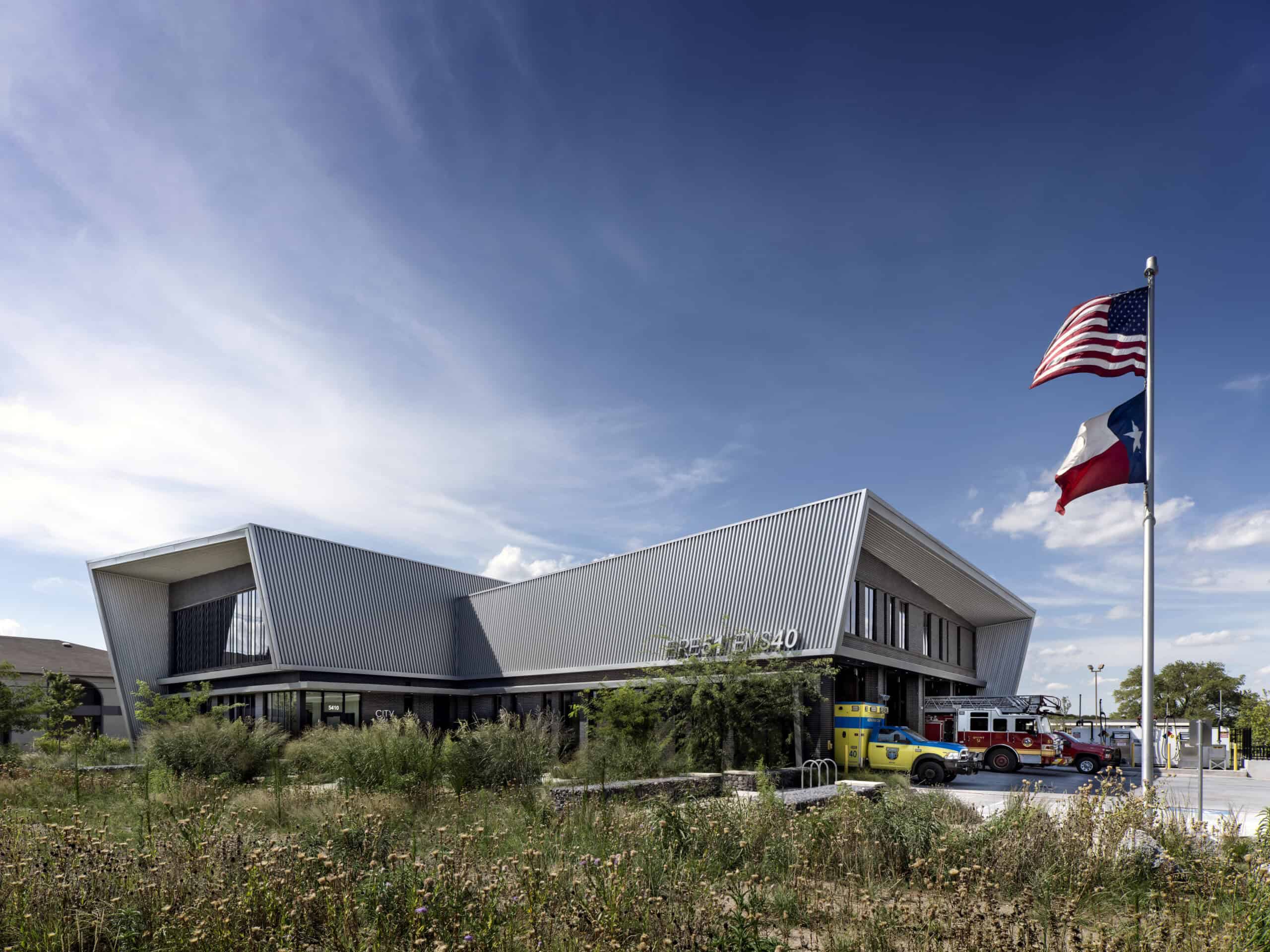


The Mission: Achieving the 8-Minute Goal
Public safety is measured in seconds. To meet the City of Austin’s goal of reducing emergency response times to eight minutes or less, the infrastructure had to expand rapidly. JE Dunn stepped in as a strategic partner to deliver five new, high-performance stations, making sure that as Austin grows, our first responders have the proximity and facilities needed to save lives.
Speed of Delivery: The Design-Build Advantage
By bundling five distinct stations into a single Design-Build contract, the project was streamlined through the procurement and construction phases. This approach allowed us to move from site-to-site with a consistent team, applying lessons learned in real-time to shave months off the traditional design-bid-build or CMAR schedules. Design-build also allowed JE Dunn and PGAL to seamlessly integrate VDC to “build” the stations virtually, identifying and solving challenges proactively and enhancing construction coordination through 3D model clash detection.
Reflecting Austin’s Neighborhoods
While the internal operations are standardized for peak performance, the exteriors are anything but cookie-cutter. Each station was designed to respect and enhance its unique environment. As well, these stations are built for the people who staff them. The City of Austin and design-build team prioritized the long-term health of Austin’s first responders by integrating:
Our design-build approach in Austin, Texas, brought the City of Austin, JE Dunn, and PGAL together from day one, fostering strong partnerships and streamlined communication.
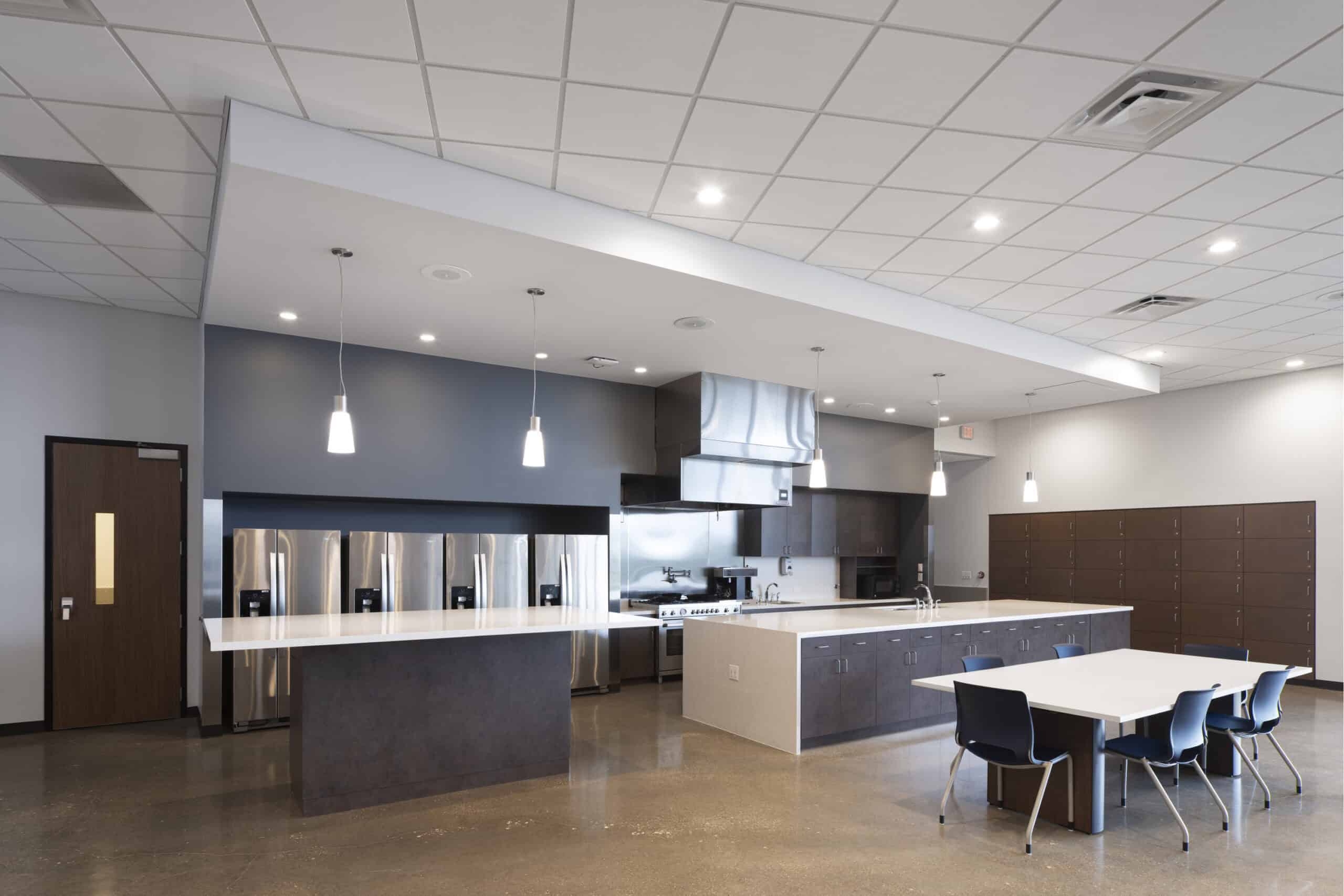
This six-year program for multiple fire and EMS stations allowed us to efficiently manage evolving needs, budget, and develop the design. The consistent project team throughout the program minimized information gaps and streamlined communication, allowing lessons learned to be applied from one station to the next. The team also learned to standardize certain design elements, like structural steel framing, improving efficiency in fabrication, installation, and pricing. The client praised this method for its speed and success in getting vital public safety facilities online.
The owner’s goals included aesthetically pleasing stations that moved beyond traditional designs. PGAL embraced this vision. Each of the five stations, while sharing a common clean, modern composition, possess a unique design influenced by its specific site, surroundings, and neighborhood context.
Designs also incorporated features for first responder health and wellness (individual dorms, spacious kitchens, rest areas) and operational efficiency/safety (decontamination rooms, specialized alerting systems, ambulance bay location).
Design-build also allowed JE Dunn and PGAL to seamlessly integrate VDC to “build” the stations virtually, identifying and solving challenges proactively and enhancing construction coordination through 3D model clash detection. We also implemented Lean principles, like pull planning, to compress design time and ensure timely information for permitting and procurement. This optimized process delivered highly efficient and effective facilities for Austin’s first responders.
Socially, the new fire and EMS stations drastically improved emergency response times in rapidly growing, underserved Austin neighborhoods. The stations serve as visible symbols of the city’s commitment to these areas and support the health and wellness of first responders, improving their morale and demonstrating the city’s value for their work. The project also helped combat crew fatigue for medics by decreasing unit utilization hours for surrounding ambulances.
Environmentally, all stations meet or exceed Austin Energy Green Building (AEGB) or LEED Silver certification goals. We incorporated eco-friendly features like low-flow fixtures, solar panels, daylight harvesting, and efficient ventilation. Two stations include native wildflower habitats, enhancing local biodiversity and natural beauty.
Economically, the new stations benefit residents by potentially reducing home insurance premiums in previously distant areas. Despite challenges like COVID-19 and material escalation, the project remained on time and under budget, a testament to the efficient design-build approach. This method proved more cost-effective and quicker than traditional delivery for these multiple facilities.
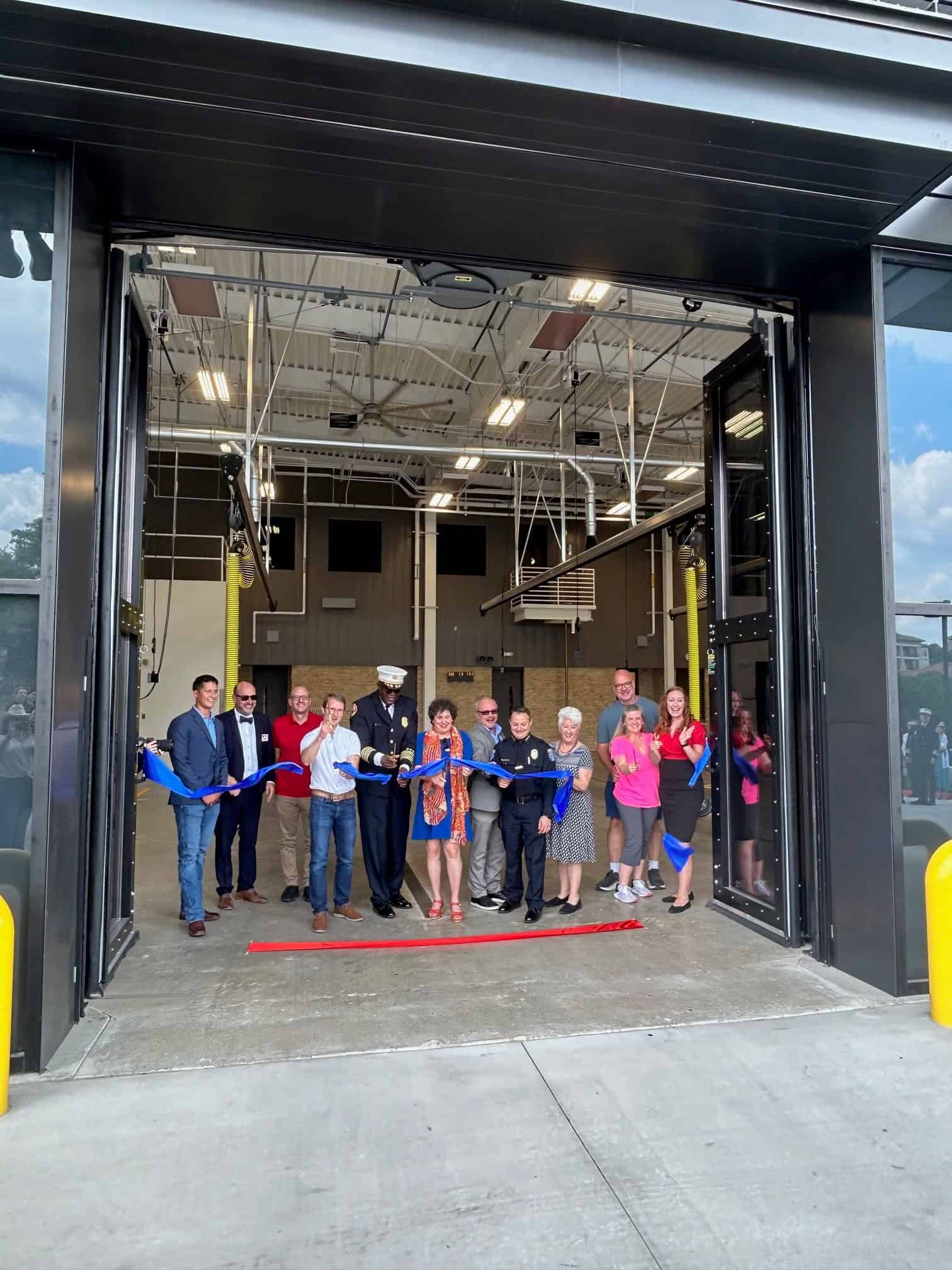
As the City of Austin Project Manager for all five projects, I will always hold this program with fondness not only for the successful delivery and professionalism of the whole team but also for the additional lives saved and impacted by delivering these stations on time.
Fill out the form to receive The Look Ahead, JE Dunn’s quarterly economic report.
