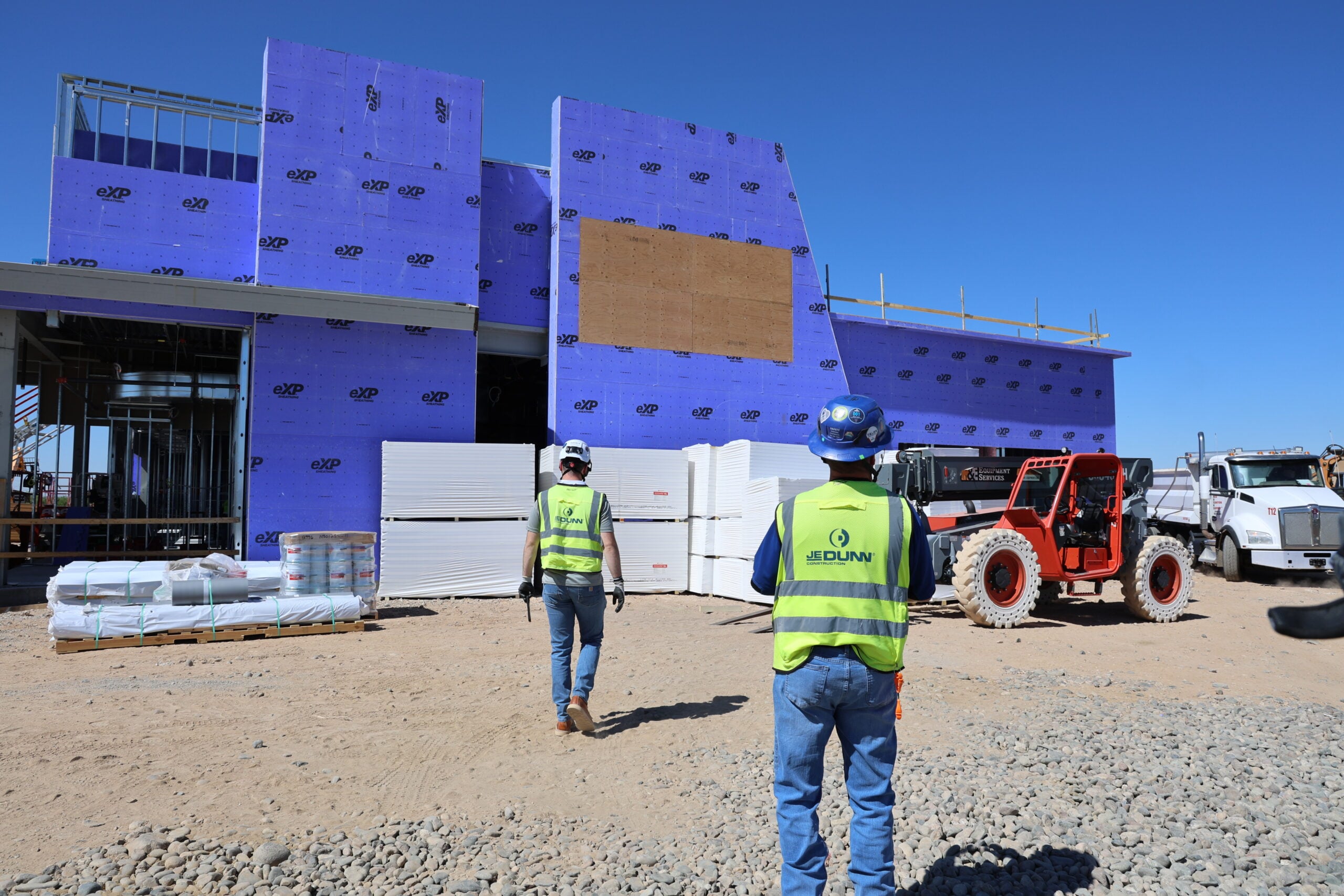



Healthcare construction hits different.
We consider ourselves community builders at JE Dunn, but that sentiment goes further when what we’re building impacts people in the most critical moments of their life. Especially in an environment where the construction industry is heavy with technology and data center projects, diversifying our portfolio of work with healthcare feels so meaningful.
Over our time in Arizona, we’ve been fortunate enough to build a large range of healthcare buildings ranging from greenfield hospitals and freestanding emergency departments to floor renovations and vehicle garages. As we reflect on 20 years in the Phoenix Valley, there’s a few things that stick out.
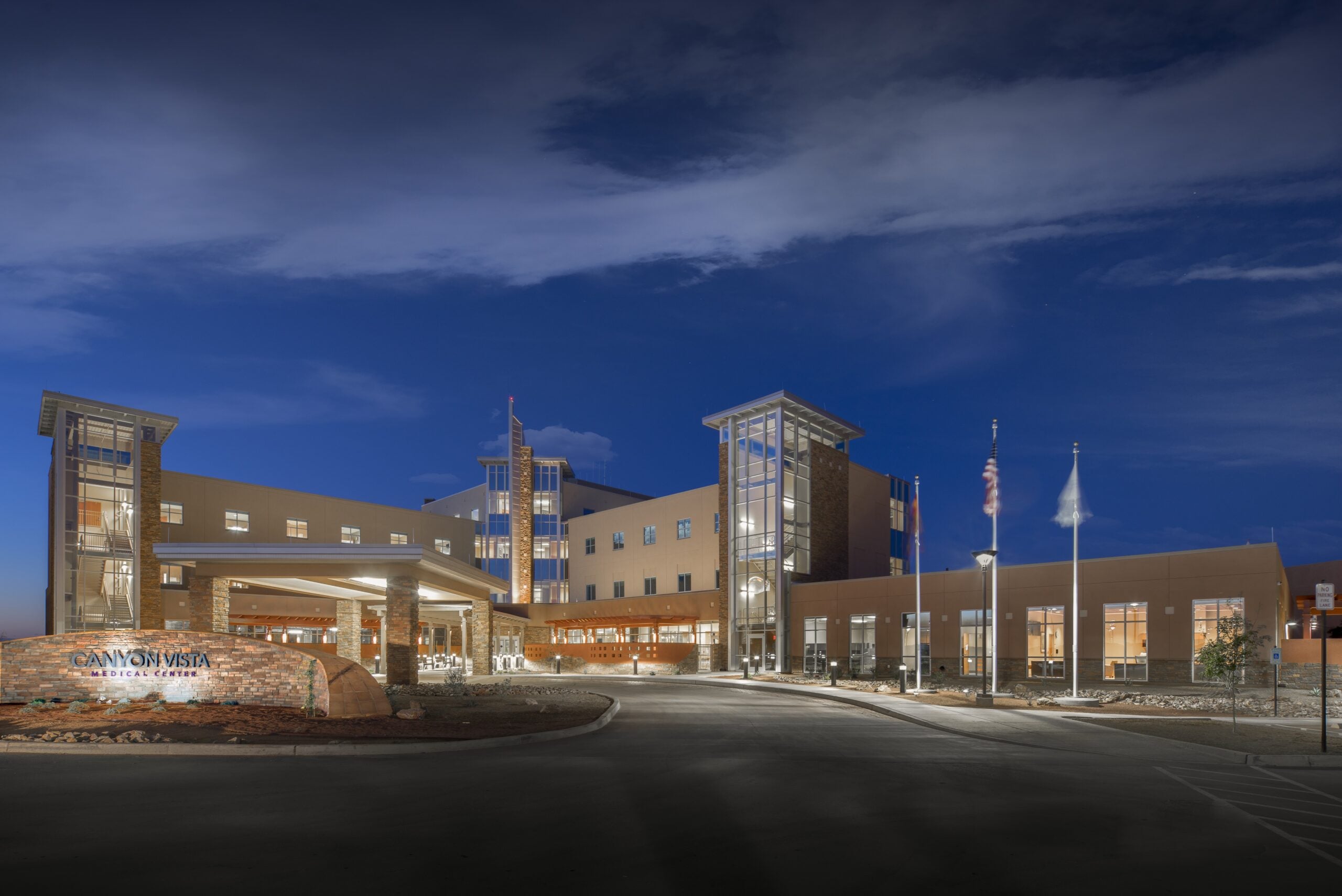
Mark: Canyon Vista Medical Center in Sierra Vista — the team was made up of 95% travelers, so we all became a tight knit team. Lots of good memories and fun times.
Jay: I would have to say the Banner Health Thunderbird 6th Floor PCU Build Out was my favorite project, because of how much effort our team had put into planning and executing the work, as well as building essential relationships, externally and internally. This was especially challenging due to the high-stakes nature of what this work represented for us, with this client, in the midst of Covid. This is the project that I will continue to refer back to, when reminding myself that we are builders, but first and foremost we build relationships.
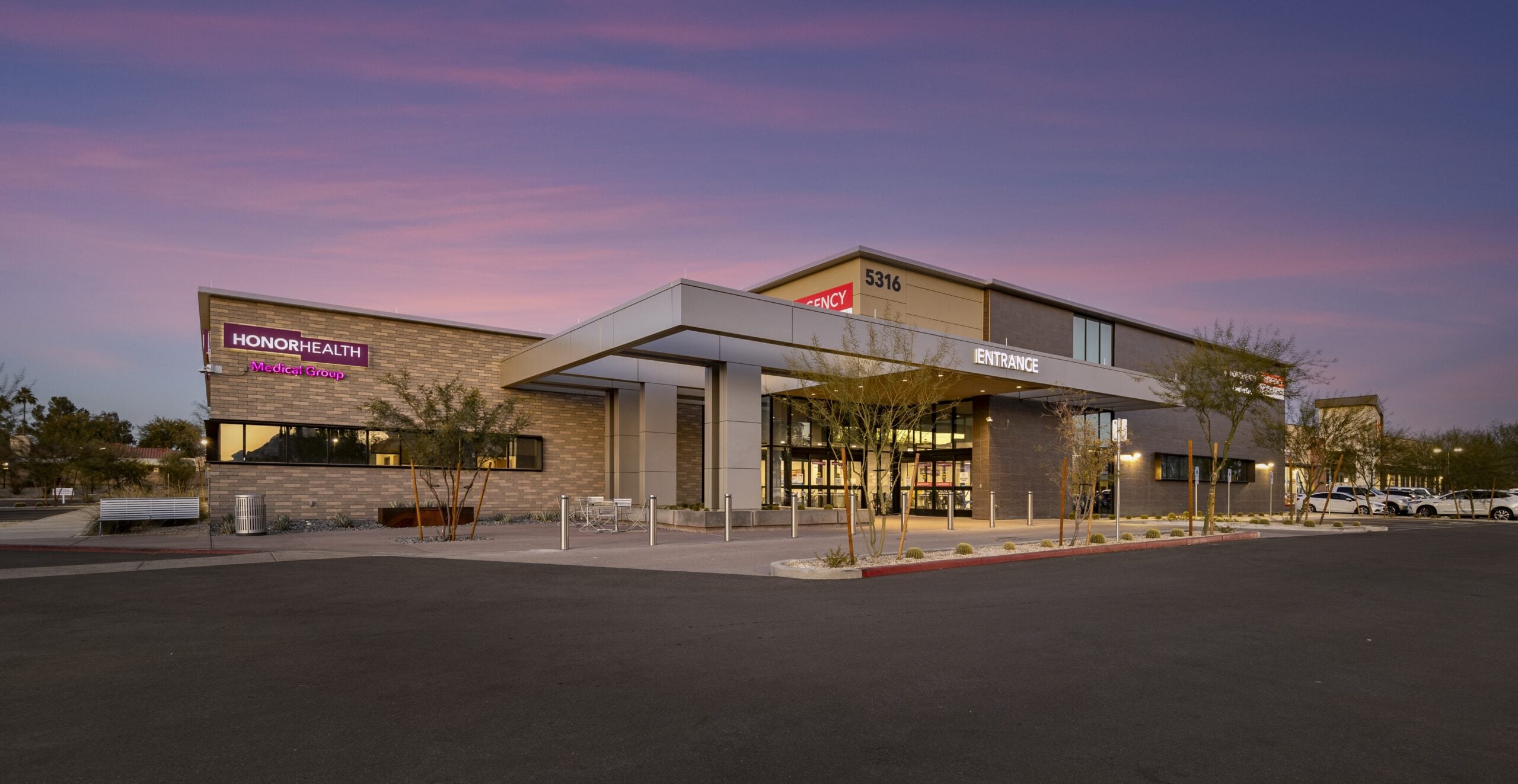
Austin: Anchor Health and HonorHealth Shea FSED was a unique project. There were elements and upgraded finishes on this one that were not on the other projects. We also had a great project team.
Mark: Healthcare projects are different from other markets because the work often takes place in or adjacent to active patient-care environments where safety, continuity of operations, and minimizing disruption are critical. Unlike a typical commercial project, construction activities must be carefully planned around patients, staff, visitors, and ongoing hospital operations. Infection control, interim life safety measures, noise and vibration, utility shutdowns, access, and phasing all require significantly more coordination.
Healthcare facilities also tend to have more complex mechanical, electrical, plumbing, and medical gas systems, along with stringent regulatory and code requirements. Successful projects require close collaboration between the construction team, hospital facilities staff, clinicians, designers, inspectors, and subcontractors. Over my almost 20 years building healthcare projects in Arizona, I’ve found that thorough preplanning and communication are especially important because even relatively small construction activities can have a direct impact on patient care and hospital operations.
Jay: The majority of my healthcare experiences are within the small-to-medium size projects. That said, healthcare projects of this scale are typically managed by our client representative/PM. They often appreciate our eagerness for direct communication efforts with the User groups (different department leads, nurses, facility ops managers, IT managers, ICRA leads). Our group manager used to always preach that we were an extension of our clients; a constant reminder that we were there to make their jobs easier.
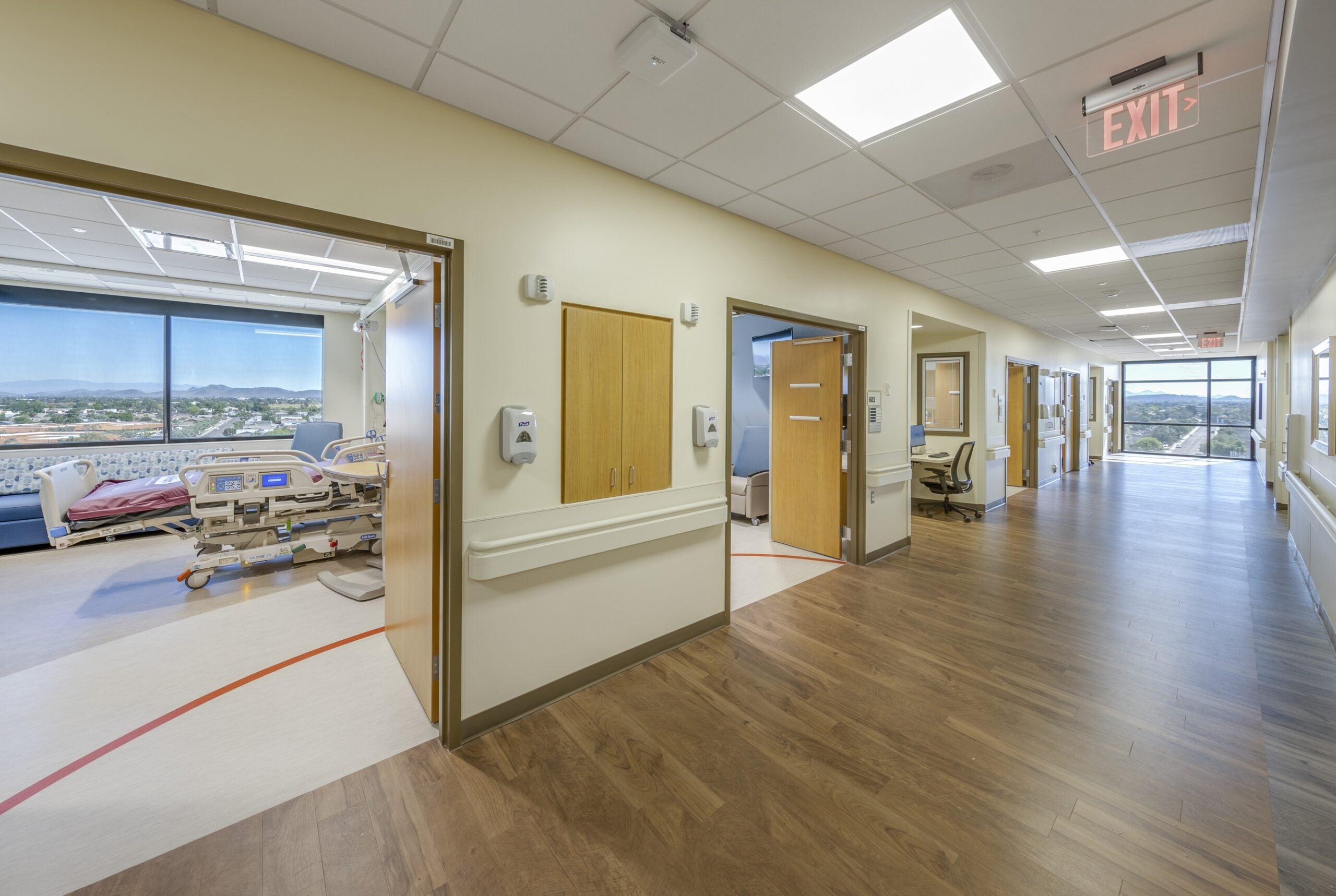
In a renovation setting, where our work is often sandwiched between adjacent live operations, whether that be recovering patients in a PCU, to ORs with surgeries underway, pre-planning of every move and its impact assessment to the facility in macro and micro levels is critical. Every shutdown of power, water, fire sprinklers, nurse call, access control, medical gas, as well as noise/dust/vibration causing work, can quite literally cost life.
Austin: Healthcare projects require a higher level of attention to detail than many other markets. Every system impacts patient care, so quality, documentation, testing, and coordination are critical. There is also a strong focus on life safety, infection control, and making sure facilities can operate reliably from day one.
Mark: One thing that stands out about healthcare work at JE Dunn, and specifically in Arizona, is the combination of national healthcare experience with strong local relationships. Healthcare construction in Arizona is a relatively close-knit market, and long-term relationships with owners, designers, facility teams, and trade partners can make a significant difference in the success of a project. It’s very common to run into the same people, sometimes working for different companies, that you have previously worked with before. Relationships matter.
Jay: Arizona has an established healthcare market with several of our major competitors all here to play in the same sandbox of clients. To become their go-to builder, we must prove that we can execute work; that often means our team has to prove that we can do so with their smaller sized projects.
Austin: We have such a strong healthcare group within the company, which helps drastically during preconstruction and construction because if there is an issue, odds are that someone in the company has dealt with something similar before and can advise. It is really beneficial to share the lessons learned.
Mark: To me, being a healthcare builder means understanding that we are building more than just a project—we are creating environments where people come during some of the most important and difficult moments of their lives. The work has a direct impact on patients, families, caregivers, and healthcare staff.
Jay: Being a healthcare builder means more than just construction on time, on schedule, with safety and quality. It also means we have an opportunity to indirectly contribute to delivering quality care to those in need within the community. That said, my favorite part of turning over a space to the User group is seeing the excitement in their faces, envisioning what they can do for their patients in the new space.
Austin: I take pride in the fact that we help our community get better access to healthcare. The Free-Standing Emergency Department model specifically helps with the issue of overcrowding EDs at the main hospitals.
Mark: One of the biggest things I’ve learned is that you can never overcommunicate or over plan on a healthcare project. What may seem like a small construction activity — shutting down a utility, creating dust, making noise, or restricting access — can have a significant impact on patient care and hospital operations.
I’ve also learned the importance of listening to the people who actually work in the facility. Doctors, nurses, facilities teams, and other staff provide perspectives that aren’t obvious from the drawings or specifications. After almost 20 years in healthcare construction, I’ve learned that successful projects depend just as much on building strong relationships, communication, and trust as they do on the actual construction work.
Jay: If I were to name one, it is that perception matters.
Austin: I’ve learned the importance of collaboration and planning. Healthcare projects bring together a wide range of stakeholders — from doctors and nurses to facilities teams and inspectors — and success depends on understanding each group’s needs and working together to deliver a facility that supports patient care.