

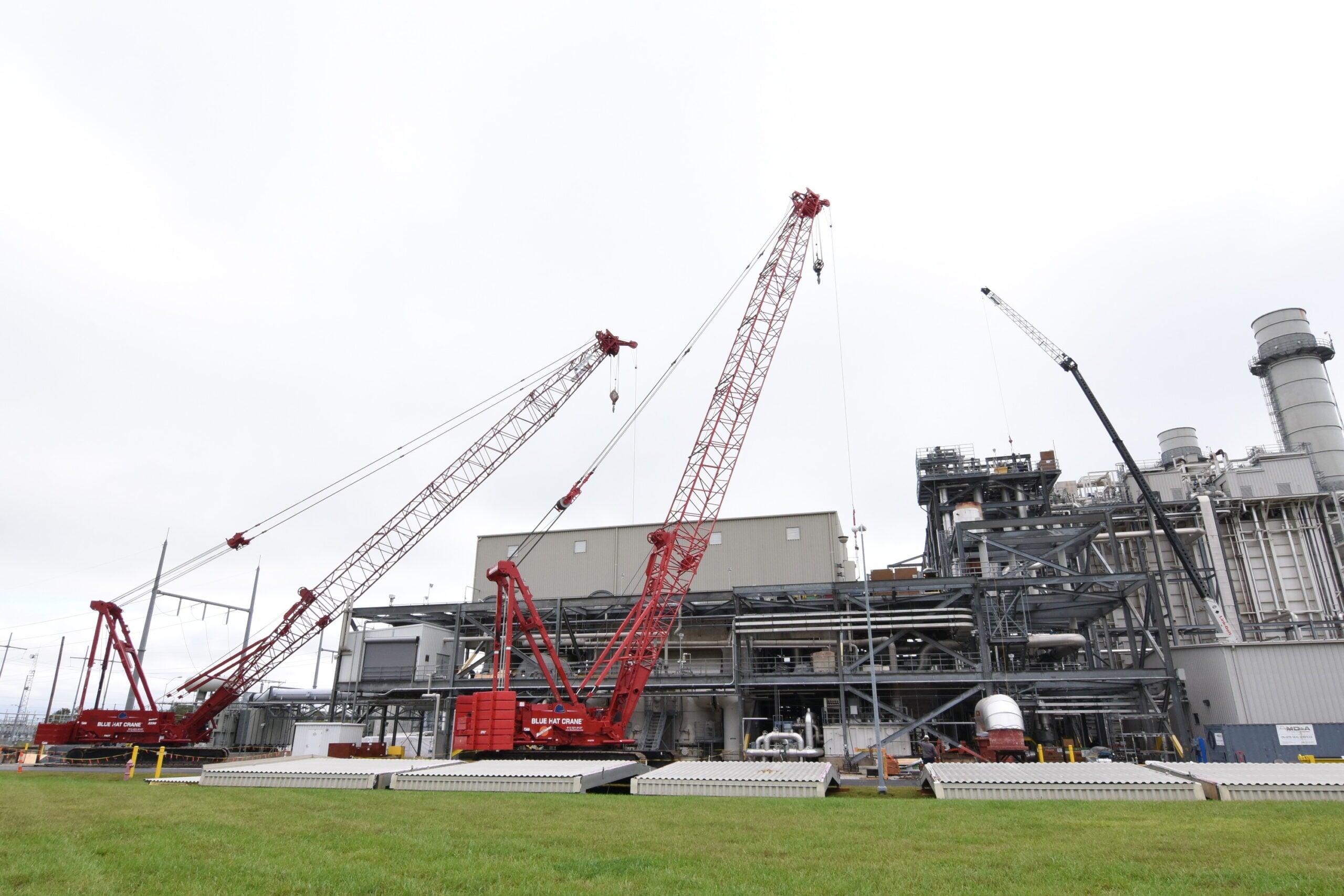


Demand for new power capacity is being driven by several forces at once — data center and AI infrastructure growth, onshoring of U.S. manufacturing, broader electrification, and the age of the existing generation fleet. In the regions where we’re active, load growth is moving in a direction the existing infrastructure simply wasn’t designed to support.
Data centers and AI infrastructure get the most attention, but they’re not the whole story. Onshoring, electrification, and fleet age are all pulling in the same direction. Recently, data centers were described on LinkedIn as the “oil wells of the 21st century.” That resonates because it captures the urgency.
What I find interesting is the split in who’s responding. Utilities are modernizing, expanding capacity, and updating aging plants to keep up with the grid. At the same time, private developers are increasingly looking at behind-the-meter or “island mode” generation so they can stop waiting on interconnection queues and control their own forward momentum. Both audiences are racing against the same clock.
Owners are evaluating dispatchable, fast-to-deploy generation because speed, flexibility, and reliability are back at the center of the conversation. The trade-off usually comes down to speed to market, fuel flexibility, and how the plant will be dispatched once it’s running.
Reciprocating internal combustion engines (RICE), aeroderivative units, and simple-cycle gas turbines are the technologies we see most often when an owner needs flexible capacity online quickly. Combined cycle still has a role for baseload.
Behind-the-meter generation sits on the customer’s side of the utility meter and serves that facility directly rather than feeding the grid. Island mode takes it further: the facility can operate independently of the grid entirely. For developers staring down a long interconnection queue, either approach can decouple the project schedule from the utility’s timeline.
Generation is only half the equation. If transmission and distribution can’t move the power, the project stalls. That’s why we focus on integrating interconnection scopes alongside generation, so owners see the full picture rather than treating the plant and interconnection as separate problems.
Our experience across more than 30 substation-related efforts and 4,100+ MVA delivered allows us to support that integration when it’s tied to generation builds or other types of projects.
A deep bench. Power work is unforgiving for the inexperienced. A partner who has walked through permitting, equipment procurement, and commissioning on similar facilities will save you weeks, sometimes months.
Look for clear communication and a track record of follow-through. Those sound like table stakes, but on a project as complex as today’s power facilities, they’re what separate predictable delivery from a schedule that drifts.
I’d push back on a myth I still hear: that EPC must be rigid or opaque, and that speed and transparency can’t coexist on these projects. They can. In practice, the projects moving fastest right now are the ones that blend discipline with transparency — owners get real-time cost, schedule, and procurement visibility while decisions are still being made, not after they’re locked in. The owners who get both are the ones who insist on it from day one and choose partners who can deliver it.
The way we run it relies on transparency, early alignment, and shared decision-making. Different owners want different commercial structures. Utilities tend to run EPC lump-sum; private developers more often want a negotiated GMP with a partner they trust to make the journey with them. We can support either, and we adapt the delivery model to what fits the project.
The challenge often isn’t just building the plant; it’s lining up the offtake and capital behind it. That’s where JE Dunn Capital Partners can play a role. Through those relationships, we can help connect developers with potential offtake agreements and capital solutions, which can be a critical step in moving a project from concept to viable development.
Time is the scarcest resource on every project we touch right now. Specialty equipment lead times, labor availability, and permitting timelines are all stretched — and these are industry-wide issues. Nobody is immune.
The way we manage it is by planning the project thoroughly up front and building contingency paths for the most likely disruptions. When something does shift, we walk the client through the pros and cons of each option and the projected outcome, and we make the call together. That keeps everyone aligned and protects the schedule, the budget, and the trust.
Permitting and regulatory compliance is the other big one. The private sector — especially developers new to power — doesn’t always realize how rigorous it is, particularly for anyone planning to sell back to the grid.
My honest advice: start those conversations with federal and state regulators, and with the receiving utility, at the concept phase. Bringing on the right specialty consultants early is one of the highest-leverage decisions an owner can make.
Regulatory isn’t a one-time hurdle. Emissions standards will keep tightening as the country moves toward net zero, and plants need to be designed with the flexibility to adapt.
We keep stakeholders aligned on complex power projects by treating the EPC role as something closer to an integrator.
We sit between the owner, the engineering partners, the OEMs, and the trade partners to make sure everyone is marching toward the same milestones at the same pace. We do that by putting people in the same room as early as possible, ideally before there’s a design package. That gives engineering partners what they need to run a progressive design-build approach and get shovels in the ground sooner, and it gives our OEM and trade partners enough context to step into bigger roles seamlessly as the project matures.
One thing collaboration unlocks is strategic thinking. Prefabrication is a good example. Form Off-Site Solutions can deliver assemblies, rack systems, duct banks, and small metal fabrication that shorten on-site durations and minimize risk in the field schedule — work that happens in parallel with site activity rather than competing with it for time and space.
Owners should plan for long-term power performance by thinking about longevity from day one. Power demand isn’t going to ease, which is why we’re seeing the modernization of older facilities along with brand new plants being built. The owners who plan well don’t just optimize for the ribbon-cutting; they optimize for the next 20 or 30 years of operation. That means installing equipment swiftly without sacrificing quality and being honest about how the regulatory landscape will evolve. The best time to plan for that adaptability is before the first foundation is poured.
Our part of that conversation is straightforward: we start by understanding the client’s long-term goals, not just the project schedule. From there, the planning, the schedule, and the trade-offs follow naturally.
Whether you’re a utility running an EPC lump-sum delivery, an IPP weighing a behind-the-meter site, or a data center developer bringing generation online in parallel with your build, the formula is the same: align stakeholders early, communicate clearly, and plan for change.
At JE Dunn, we’ve put real investment behind the power market with a dedicated power team, the right engineering and OEM partnerships, and a delivery approach built around what owners actually need.
Fill out the form to receive The Look Ahead, JE Dunn’s quarterly economic report.

Ryan Wilson is a Project Manager at JE Dunn Construction, serving industrial and manufacturing clients. Ryan has spent four years of his seven-year career on projects with Georgia-Pacific. He has served as Last Planner Champion on multiple projects and is an advocate for big rooms, choosing by advantages, target value delivery, and other lean practices.
As a Project Manager, Ryan coordinates all JE Dunn and trade partner project activities, beginning in preconstruction by leading collaborative efforts with the owner, architect, and key trade partners.
Ryan received his bachelor’s degree in civil engineering from Mississippi State University
