

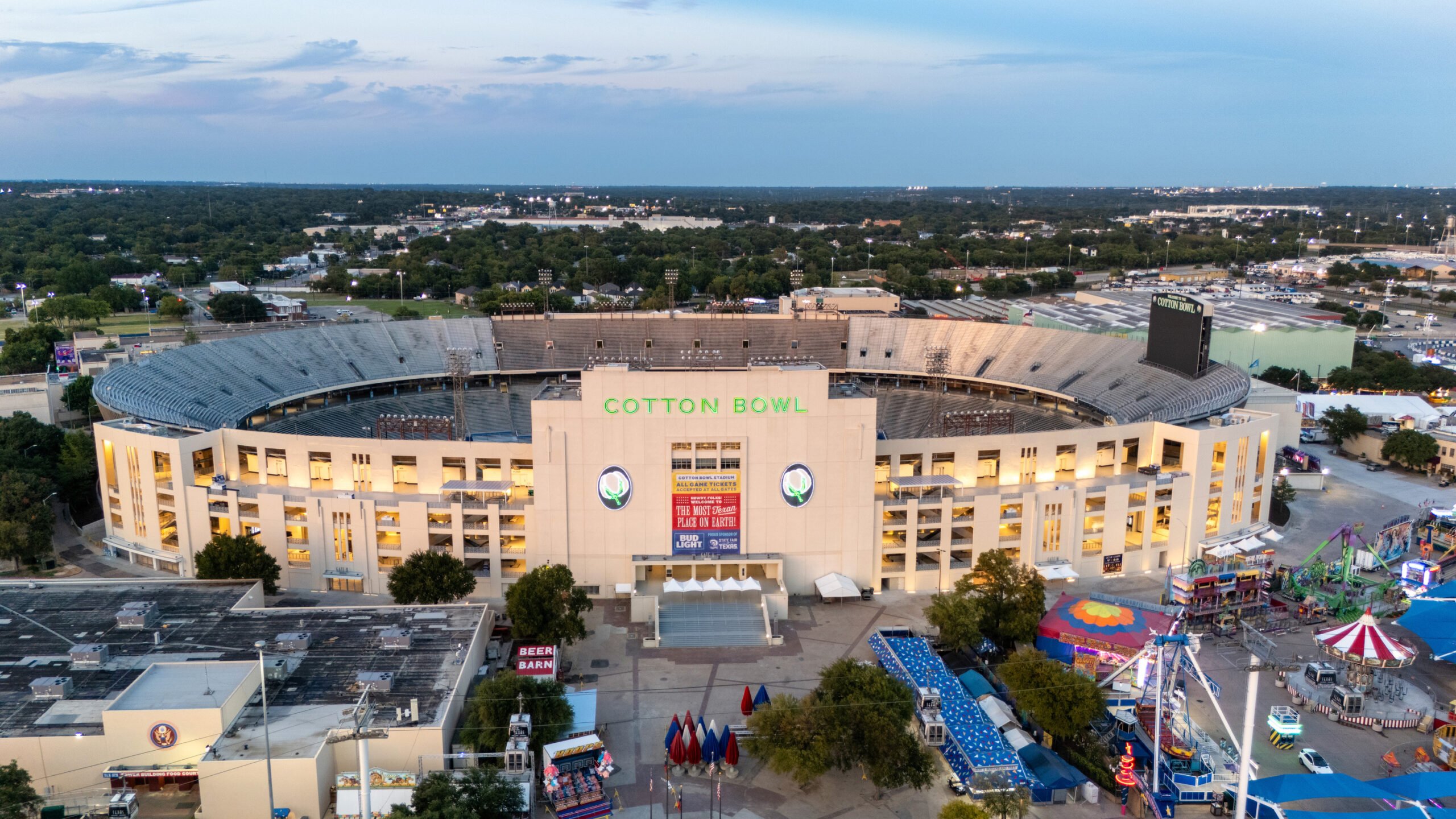


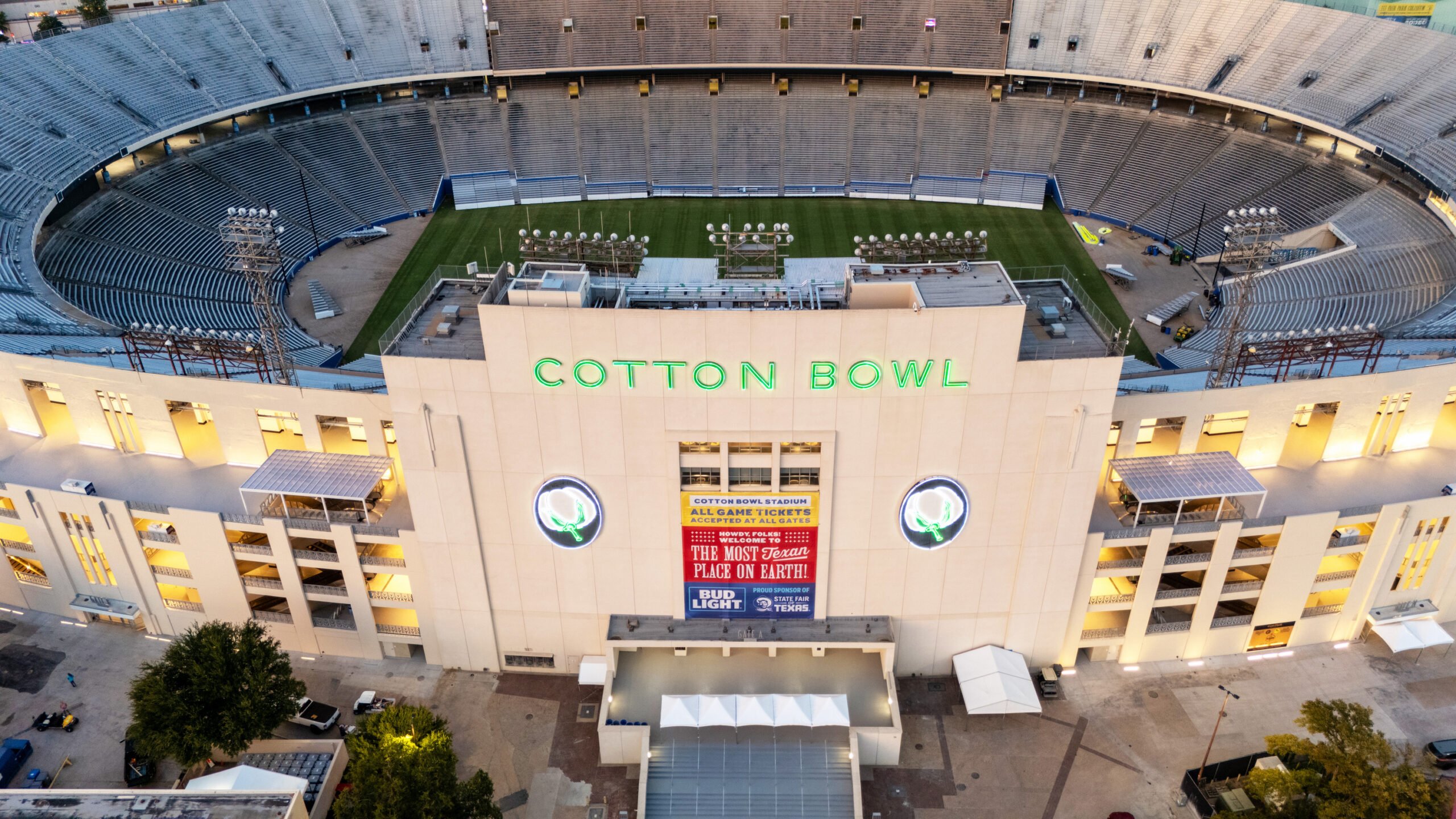
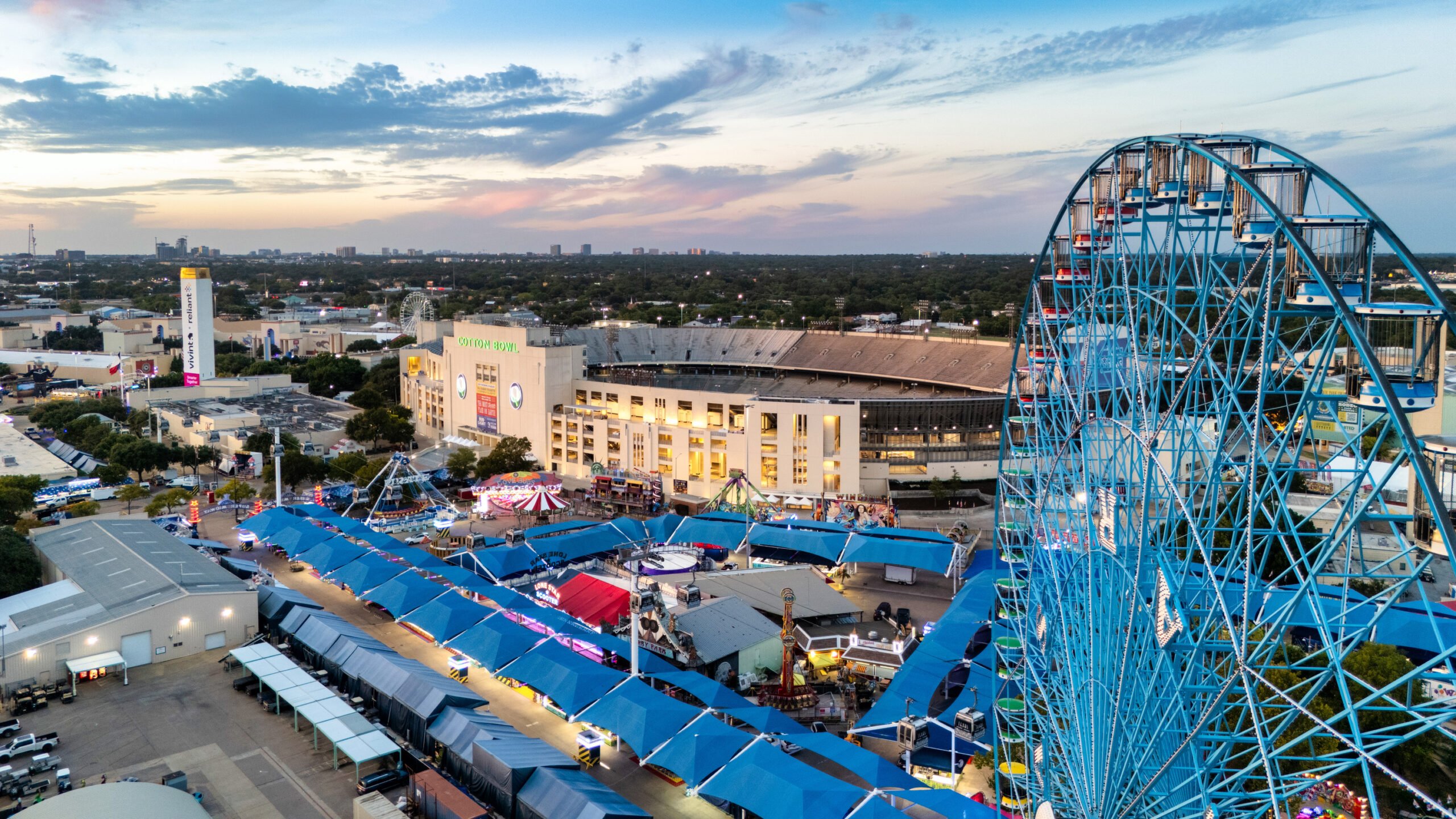
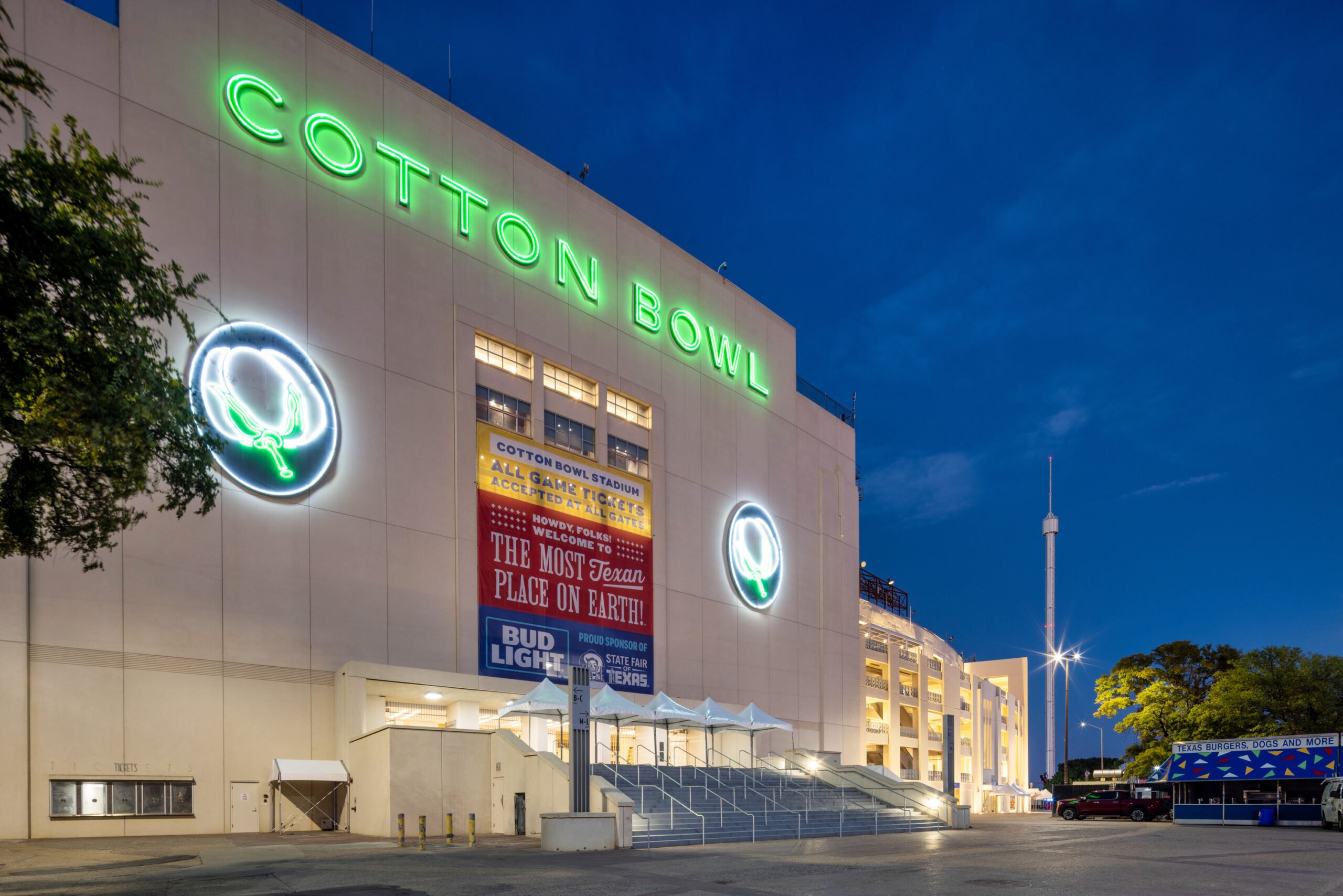
The expansion of the historic Cotton Bowl Stadium restores its status as a world-class entertainment destination while securing its future as the home of one of college football’s most iconic rivalries.
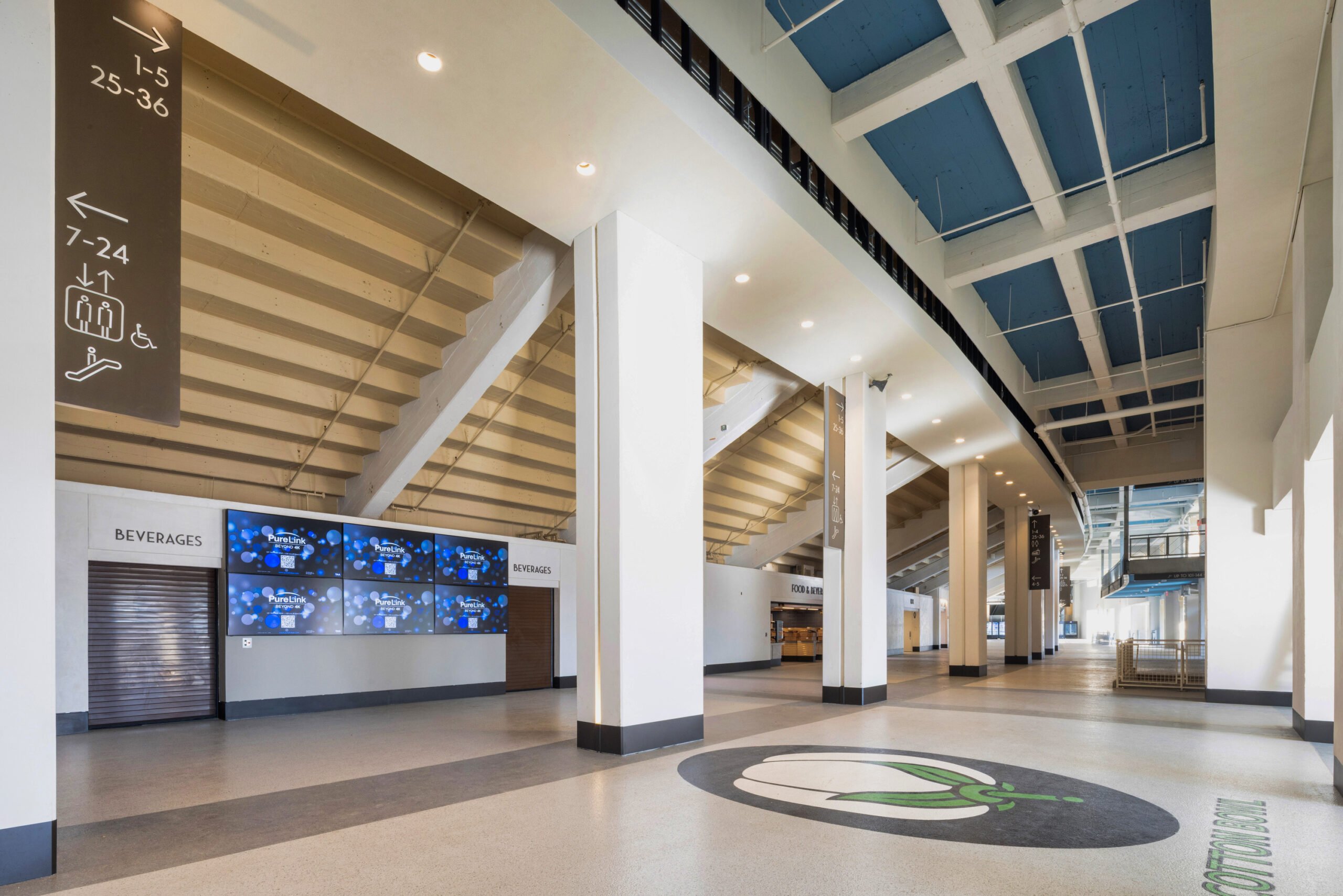
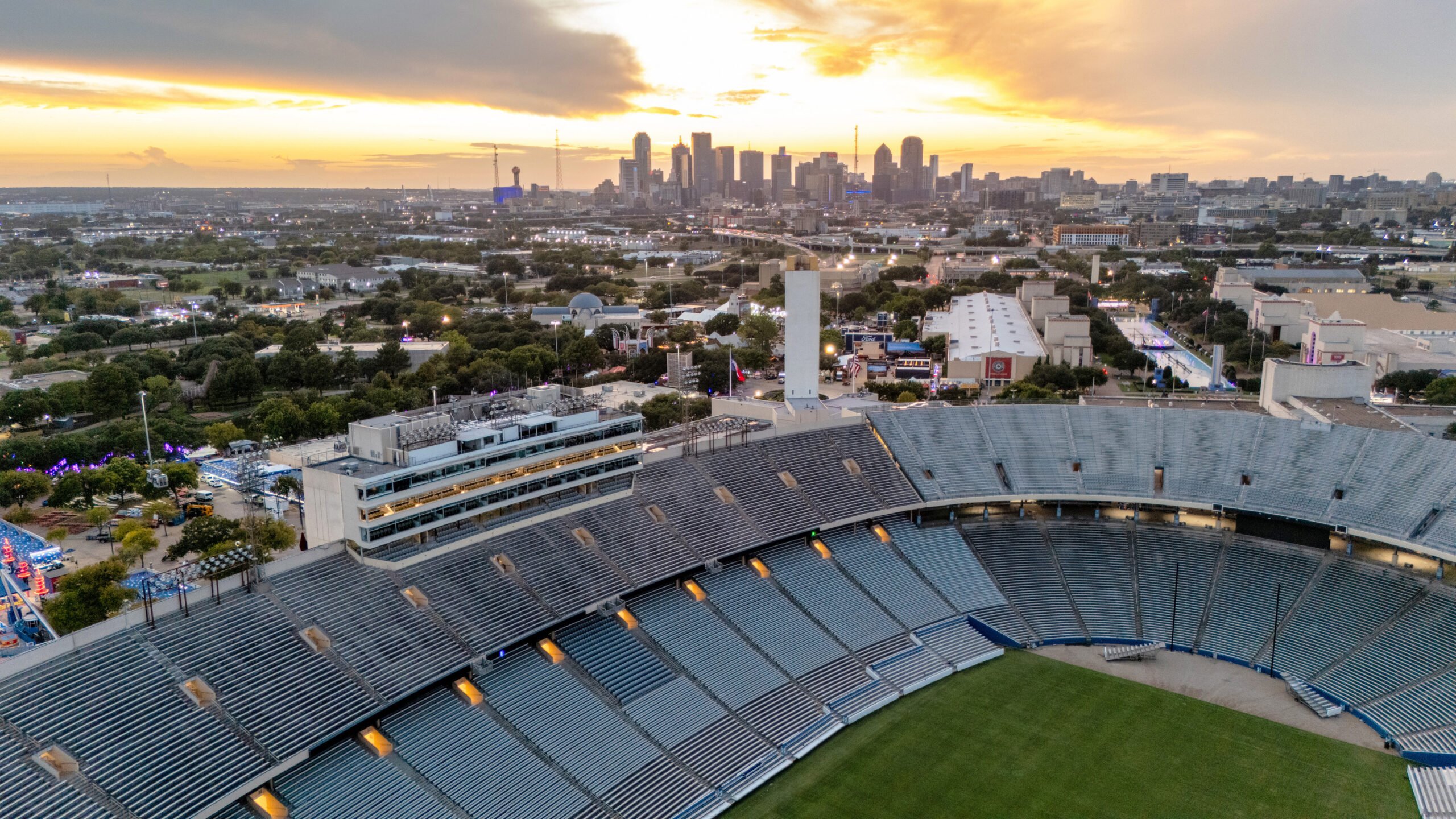
Key improvements included adding 14 new escalators and constructing new multi-story entries at the two west entrance gates. The highly anticipated renovations at the stadium centered on enhancing the fan experience with immersive environments on and off the field, supported by upgraded technology and safety systems. The upper west concourse square footage was expanded to threefold and features two outdoor terraces with views of downtown Dallas. The main concourse on the west side was doubled in size.
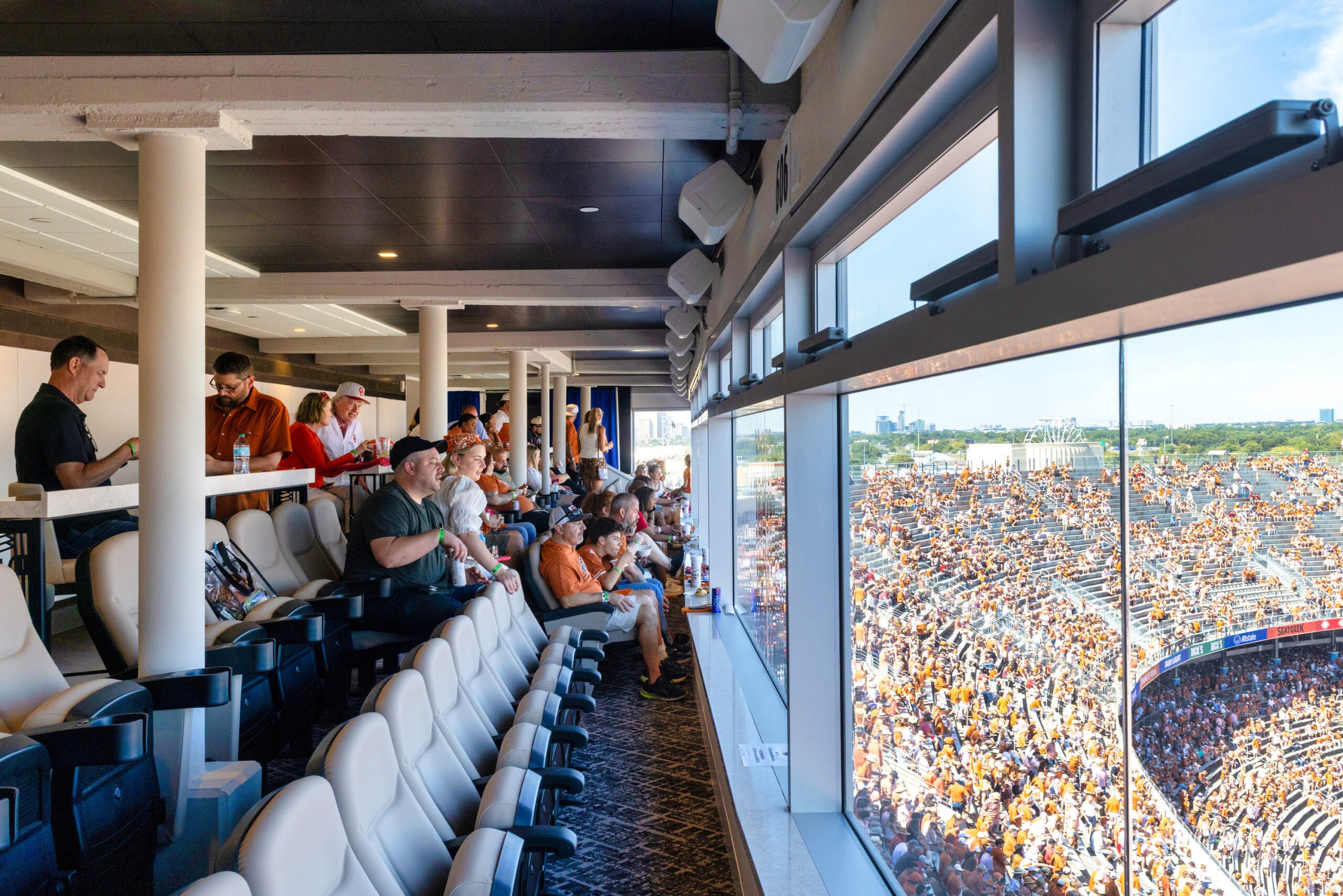
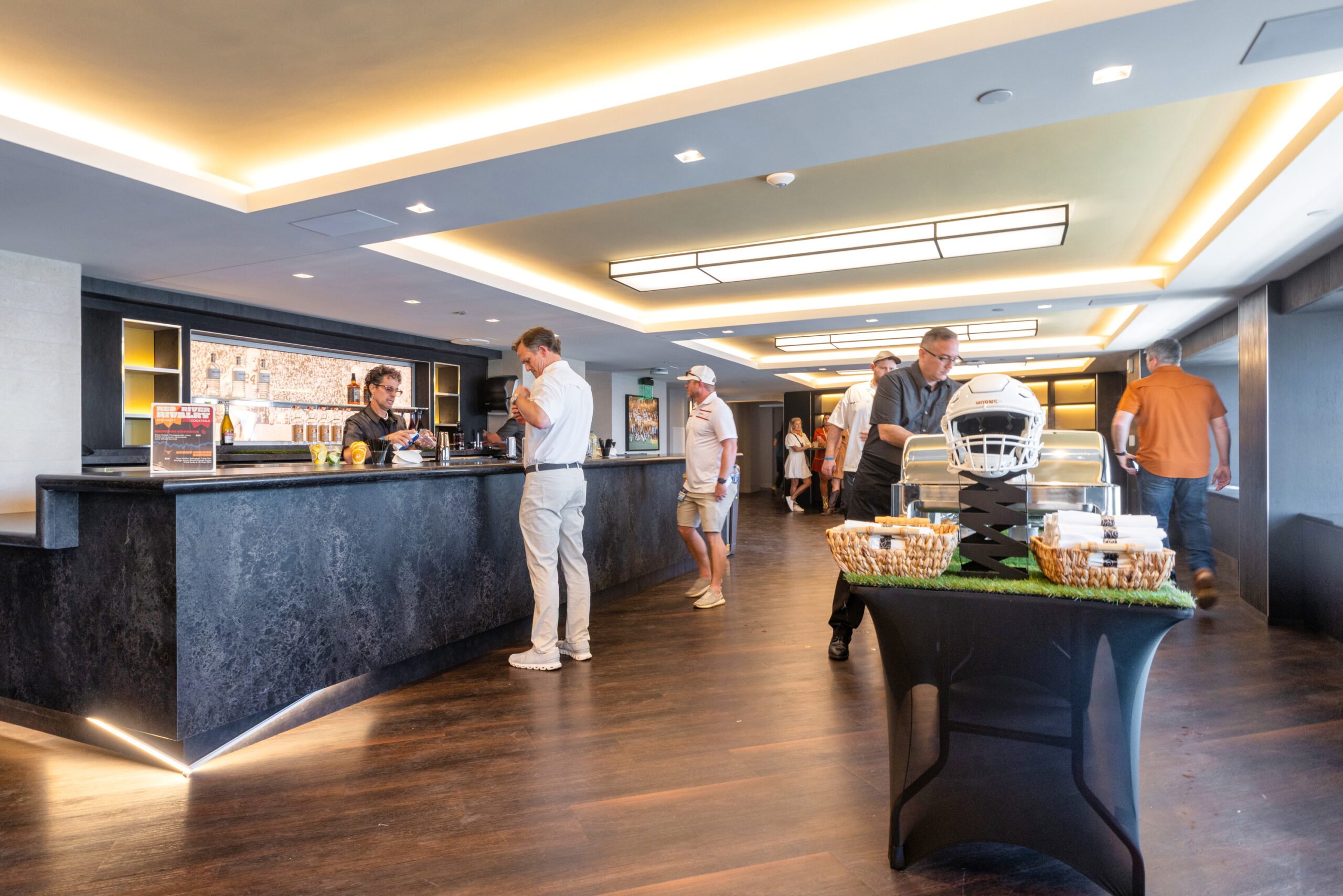
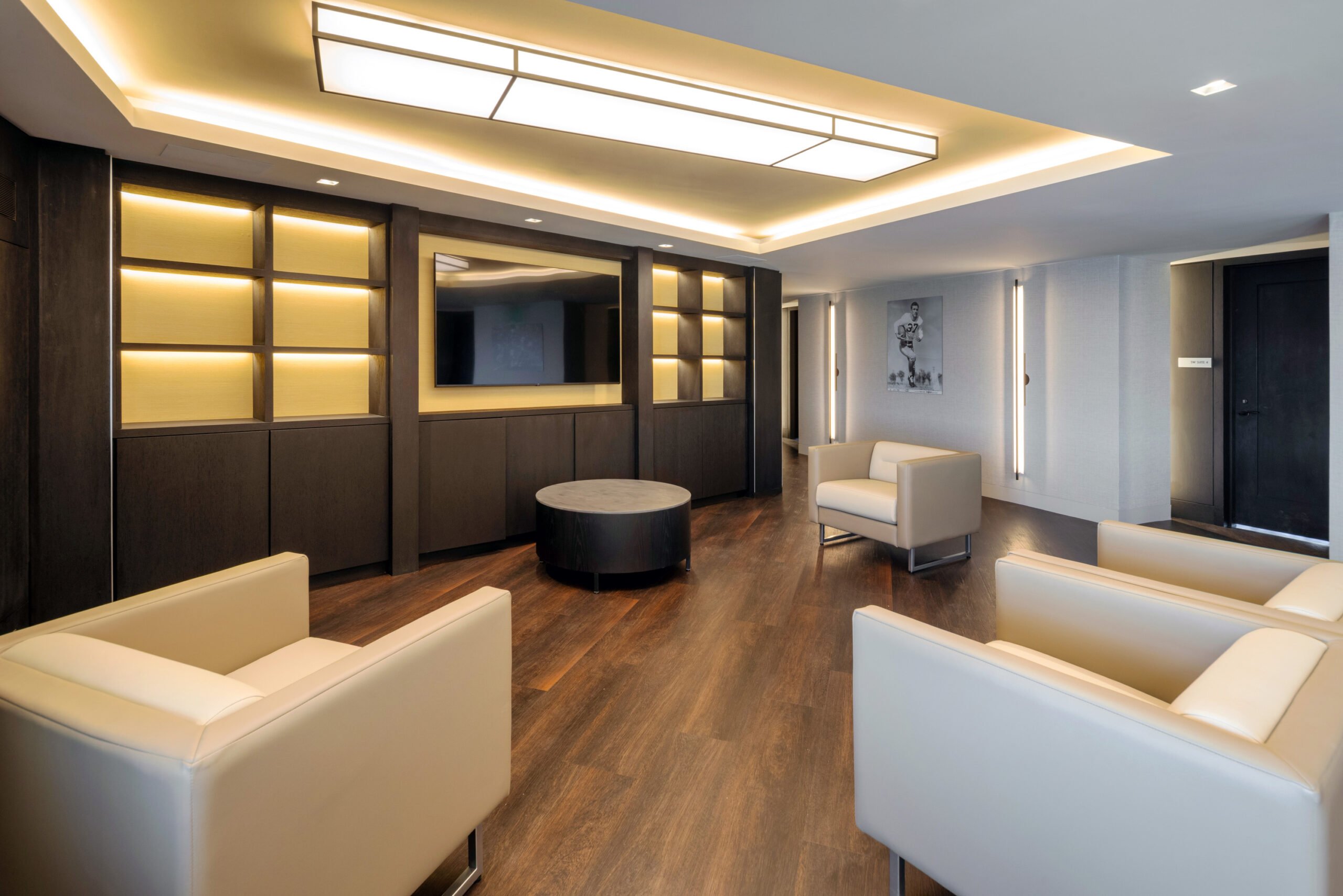
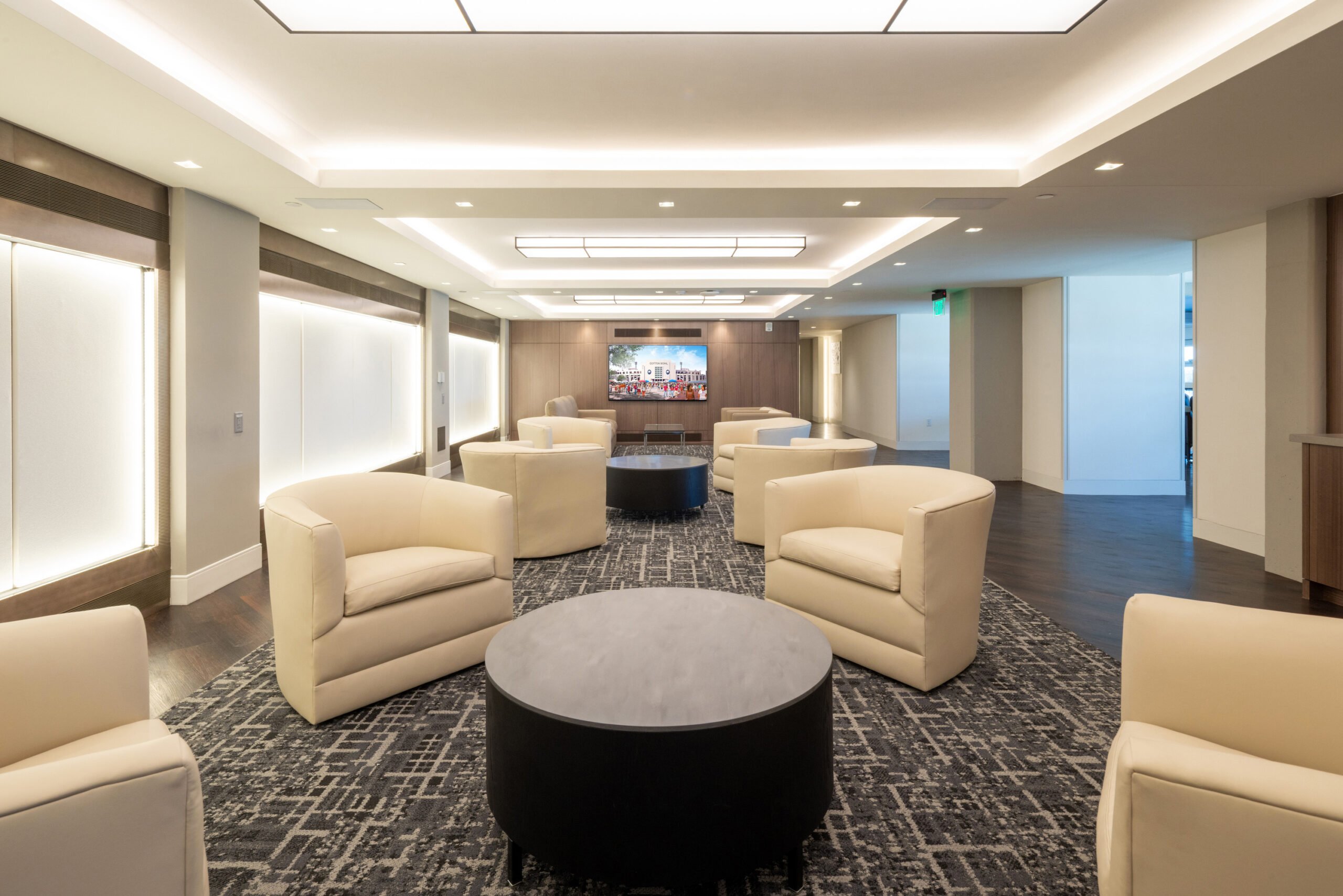
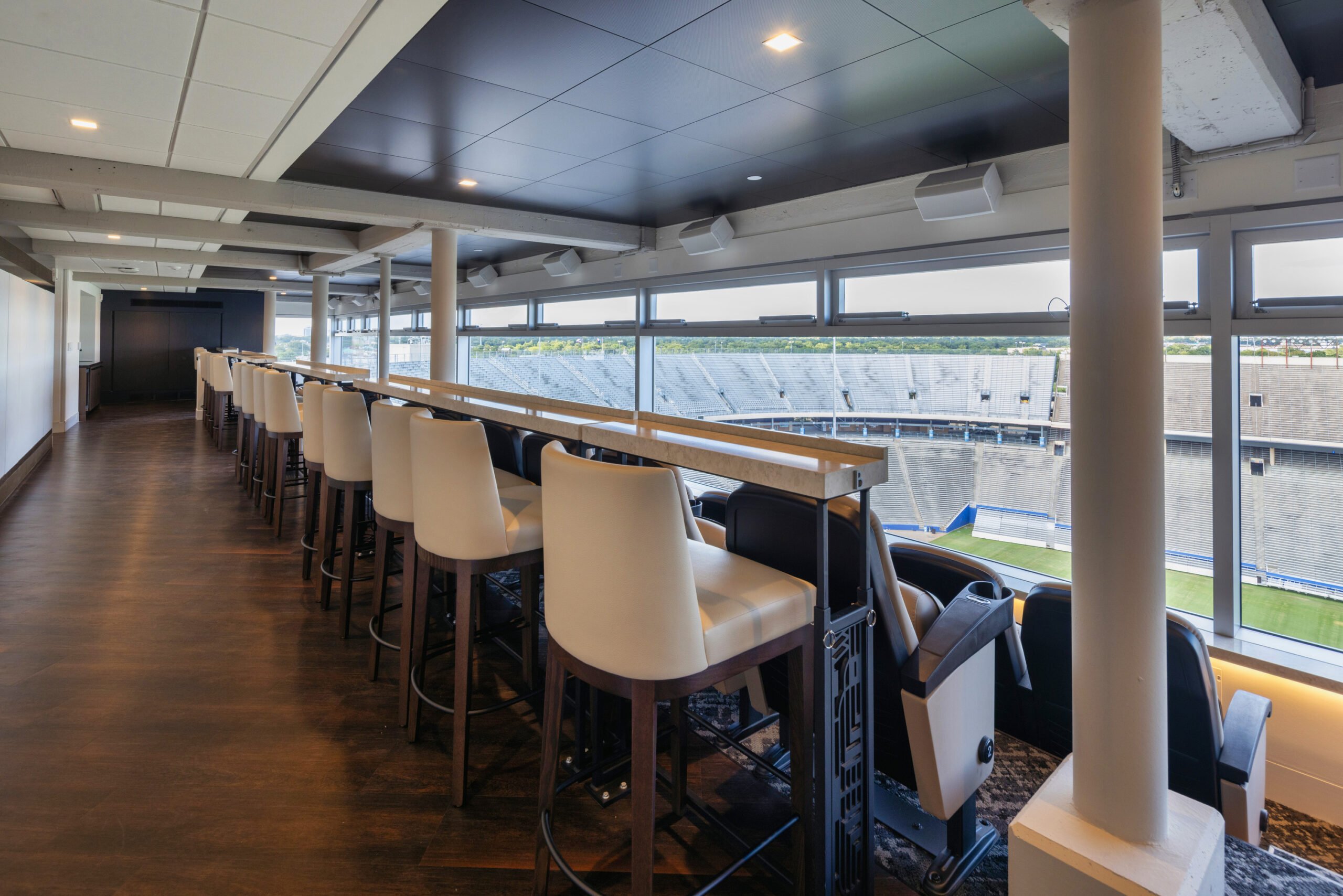
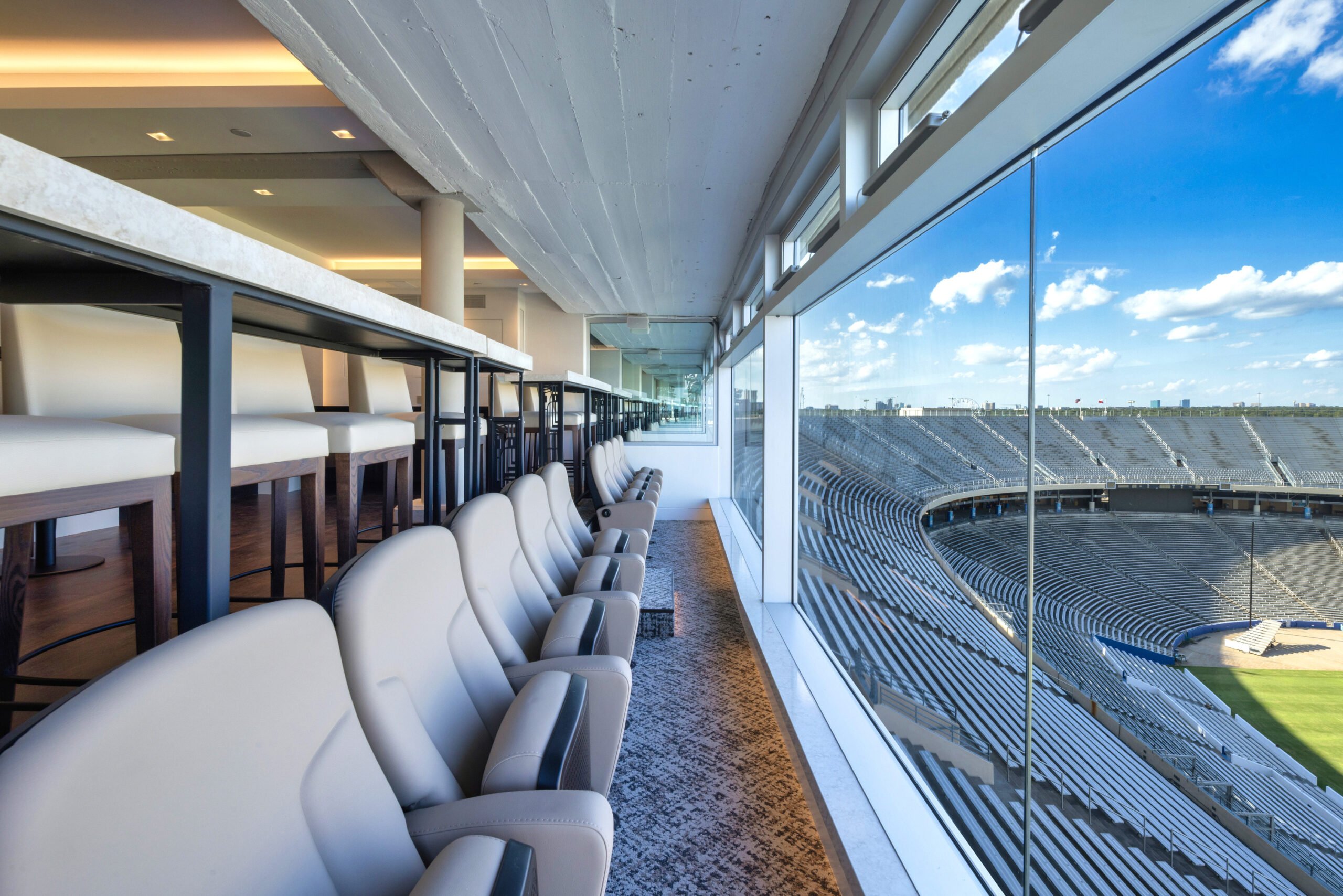
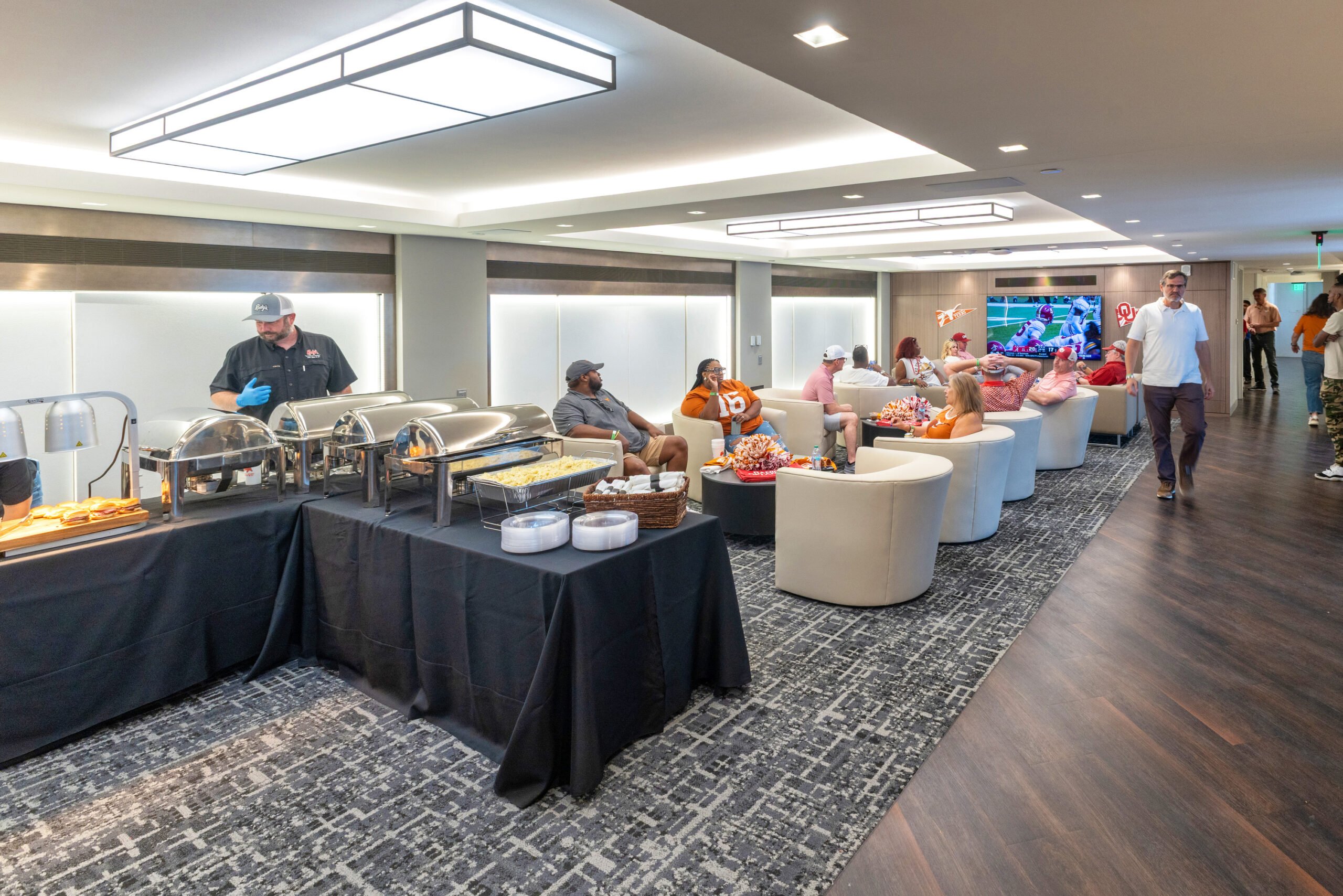
Additional upgrades included new and additional restrooms and concession stands, the creation of new premium seating spaces, and an expanded Writers Press area in the south end zone. These enhancements elevate the overall fan experience, ensuring comfort, convenience, and a touch of elegance throughout the stadium from suites to stadium seats to a spot in the concessions line.
To achieve a balance between preserving the historic character of the Cotton Bowl while incorporating high-end modern finishes as part of the update, precast panels were installed along the exterior of the new structure, carefully mirroring the original precast behind them. These panels were sandblasted and color-matched to seamlessly blend with the existing façade. Inside the new concourse areas, color-matched plaster was applied throughout concessions and restrooms to maintain visual continuity with the stadium’s original palette. This consistency was achieved through multiple mockups and samples, ensuring a cohesive look throughout the building.
Once inside, visitors can now experience the upscale concourse envisioned by the design team. The renovation delivers a much-needed interior transformation — from luxury suites and upgraded restrooms to modern grab-and-go concession stands — positioning the Cotton Bowl to continue hosting major events amid a competitive landscape of newer stadiums across the metroplex.
Expanding and restoring the Texas Cotton Bowl renews Fair Park as a historic attraction built to bring Texas history, community, sports, and live entertainment to the world stage just 11 years shy of the Texas Republic’s 200th anniversary and a century since hosting the 1936 World Fair.
The historic Texas Cotton Bowl is part of Fair Park, a National Historic Landmark located in 80 acres of cotton fields east of Dallas. Fair Park opened in 1886 with what was then called the Dallas State Fair and Exposition. Eventually, Fair Park would come to host the annual Texas State Fair and build a 45,507-seat stadium in 1930 that would later be dubbed the Texas Cotton Bowl.
In 1932, the Cotton Bowl became the neutral site for the Texas Longhorns and Oklahoma Sooners’ annual matchup, the Red River Rivalry. Recent renovations to the Cotton Bowl ensures the more than 120-year-old border war game will stay at Fair Park.
Texas Christian University and Marquette University faced off in 1937 for the inaugural Cotton Bowl Classic. The college bowl game was played there until January 2010 when it moved to AT&T Stadium.
In 1960, the Dallas Texans (now known as the Kansas City Chiefs) of the then-new American Football League and the new Dallas Cowboys of the existing National Football League would play their first season in the Cotton Bowl. The Dallas Cowboys would continue playing at the Cotton Bowl until moving to a stadium in Irving, Texas, and later its current home: AT&T Stadium.
In 1994, Fair Park and the Cotton Bowl served as one of nine American venues hosting the FIFA World Cup. For the 2026 FIFA World Cup, the Cotton Bowl is slated to serve as a training site in counterpart to AT&T Stadium (referred to as Dallas Stadium during the tournament), which will host nine matches.
Today, the premier venue hosts concerts, serves as the home field for the Dallas Trinity FC professional and elite youth soccer games, and remains a cornerstone of Dallas’ live entertainment scene.
With existing structures, the only thing known is that there will be unknowns. There were several aspects that proved challenging throughout construction, some of which were uncovered later in active construction. The first involved tying the new structure into the existing stadium. For the new work to perform as designed, it needed to integrate seamlessly with the original structure and align with existing elevations that the team later found had settled over time, resulting in varying floor elevations throughout the building. Multiple layout efforts coordinated by the wider project team and completed by JE Dunn Self-Perform crew members were required to ensure we achieved the correct elevations.
Additionally, JE Dunn Self-Perform steel experts faced the challenge of constructing an entirely new structure within the interior of the Cotton Bowl. This “hang-down” mezzanine structure, located between the upper and lower bowls, required careful planning to maneuver equipment and materials through the existing building. Tight access and structural limitations made this one of the most complex components of the project to plan and execute.
To allow the concourse to expand as designed, the existing switchback ramps needed to be completely removed despite the crucial role they played in the building’s structural integrity. With the help of a third-party engineer’s designs for a temporary bracing system, JE Dunn erected a full scaffolding system to serve as a catch deck for each ramp. Starting from the top landing, JE Dunn teams carefully demolished each ramp one level at a time while simultaneously installing the required bracing. After several weeks of methodical demolition, scaffold removal, and brace installation, the project team finally reached the ground floor. From there, JE Dunn Self-Perform concrete specialists could begin structural strengthening.
To ensure the existing columns and beams could carry the load of the newly expanded concourse — and to allow removal of all temporary bracing — each column and beam required approximately six inches of concrete encasement. This required systematically working floor by floor to install reinforcement and pour new structural decks.
At peak periods of construction, roughly 90 JE Dunn Self-Perform crew members were working on site 24 hours a day to deliver results on time for the Cotton Bowl to host the 2024 and 2025 Texas State Fairs. By having an aligned and unified project team with a shared vision for quality and safety, Self-Perform steel and concrete scopes were completed successfully and early despite these challenges.
Aptitude: Intelligent Integration™, a strategic trade partner of JE Dunn, was also brought on to the Cotton Bowl expansion to update life-saving fire and security systems while also improving and updating critical systems for modern broadcasting and other live event operations. Having Aptitude’s expertise on site and involved from the beginning ensured Cotton Bowl operations could safely continue for concerts, sports games, and other events still being held throughout construction. To do this, fire alarm loops were run to preserve life-safety systems, and stadium audio/visual systems required testing before every event. In several cases, systems that needed to be disconnected for construction had to be fully reconnected or temporarily restored by the weekend to support scheduled events, requiring precise coordination and rapid turnaround by the project team.
Throughout the project, Aptitude team members also routed, relocated, and reconnected more than 140 lines of fiber across different venue levels without any broken lines, sometimes working with glass fiber lines that spanned thousands of feet. The newly integrated and updated systems serve to ensure greater safety and fan immersion whether in a seat or enjoying other amenities in the Cotton Bowl. The modernized systems also allow for future upgrades and reduced risks for issues during live operations and event broadcasts. These efforts ensure that the sounds, sights, and security systems all operate smoothly and seamlessly for fans to stay engaged and immersed at the Cotton Bowl.
Fill out the form to receive The Look Ahead, JE Dunn’s quarterly economic report.
