In construction, our focus usually lands on schedules, budgets, materials, and manpower. However, culture — how people work together and communicate — may be the most powerful tool on any jobsite.
Last year, at the 2024 Lean Construction Institute (LCI) Congress, our team shared how the hit TV show, Ted Lasso, helped build a high-performing, deeply connected project team. We called it The Lasso Way — a blend of empathetic curiosity, optimism, and Lean principles. It worked! The project was successful and, most importantly, people enjoyed working together! We thought we had “cracked the code” for successful Lean deployment and were ready to duplicate that success.
Then came 2025 and all our enthusiastic Lasso teammates moved to new projects. “That’s ok,” we thought. “We will just use the Lasso Way with our new teams, and all will be great!” That did not yield the results we expected…
❌ The Myth of Top-Down, Transferable Culture
We tried. We failed. The teams were just not interested in Ted Lasso or Lean.
Why? We didn’t know why at first, and quite frankly, we got a bit discouraged. So, we went back and rewatched Ted Lasso to actively identify the specific strategies Ted used with his new team.
What did we learn? We learned our new teams didn’t know about, nor did they want to know about, Ted Lasso. It simply wasn’t their thing. Regarding the “Lean Bandwagon,” most of the team leaders had been burned by “bad Lean,” in the past, meaning former teams were pushing processes over people. Our teams were made up of seasoned builders who had found success with their own methods. They didn’t see a need to change.
We learned some valuable lessons here. First, we had assumed we could start with our new teams where we left off with our previous teams. That simply was not the case. We also learned culture wasn’t a template we could rinse and repeat. Instead, our teams had to have the time and the space to form and storm together, putting in sweat equity, trying things and getting frustrated, working through issues together, etc., to build high-performing teams with their own unique Lean identities.
🌱 The B.E.L.I.E.V.E. Framework
So, we pivoted. We tried a new approach; one that wasn’t focused on a set of rules or methods used by someone else, but one focused on learning about and empowering new teammates. Reminded by what Ted Lasso posted above his door when he moved into his new office, we recognized we needed to BELIEVE and used it as an acronym to help us remember how Ted Lasso started from scratch to build a new team. B.E.L.I.E.V.E. stands for:
- Biscuits with the Boss(es) – This is taking time to have coffee, donuts, or biscuits with your new bosses and learning about them as people. We realized we sometimes put our project leaders on pedestals and viewed them as positions, when they were in fact people with stories and feelings. We needed to introduce ourselves, not by coming in to solve project issues and giving our suggestions, but by just learning about who they were and what they valued. Open-ended questions like those coming from “the conversation stack” (Google to learn more) can be used to build informal, personal connections while understanding your bosses are people just like you.
- Engage your Beard and Doc – Our Beards are our right-hand folks that are there for us; our close friends that get us and support us. These are the folks that aren’t afraid to challenge us and have our backs on the worst of days. Our Docs are third-party professionals that can help us when we get stuck. Whether that is a support group, a mental health provider, or a consultant, it is courageous to reach out and ask for help to find hope and get better. You cannot do this journey alone, so find your support group now.
- Let your Leaders Lead – Everyone on our project has potential to lead our team, and it is our job as the team “coaches” to find them and call them up so they can learn and grow to step into their potential. We need to give them a safe place to take on new challenges, learn from mistakes, and stretch outside their comfort zones.
- Invite your Trent Crimms – If we are truly trying our best, we have nothing to hide. Therefore, rather than hiding from and avoiding our critics, welcome them humbly to your workspaces and let them uncover your blind spots.
- Empower Team Learning – As your team learns and grows, call them up to teach the rest of the team about what they are learning. Let them prepare and lead a lunch ‘n learn presentation so knowledge and expertise can be shared while giving people opportunities to lead and teach.
- Validate your Players – Recognize your teammates as unique, talented people and reward their effort and progress. Get the team together and share gratitude with each other. Put everyone on the same playing field as “doers” when tasks get burdensome or overwhelming (Scrum is a great technique here). Be an example of humility and show your team they matter.
- Exit the Spotlight – You got the team going. You found your team leaders and gave them opportunities to lead. Now you need to back out of the spotlight and let them keep growing and shining. Build up others and give them the credit.
This wasn’t a checklist, but a mindset and a personal reminder to let your team build their culture, not imposing yours on them.
🔍 Leadership Isn’t One-Size-Fits-All
As we observed our teams and how they interacted, we began to make connections between our leaders and the Ted Lasso leaders. We found our leaders fitting into these character archetypes:
- Roy Kents – These are our leaders who are tough, abrasive, respected by the team, and skeptical of leadership. They are already leading. Our job as leaders is to step back and let them lead, building trust with them by listening to them and getting obstacles out of their way.
- Jamie Tartts – They are very talented players, but self-focused. They are strong influencers, but leading people the wrong direction. We need to remember they are wounded from their past and mostly need encouragement and affirmation. Hold the line but give them grace. Show them they have a safe place to mess up and grow.
- Nate Shelleys – These are the leaders who don’t know they can lead. They are smart and savvy, but also quiet and often overlooked. They check the boxes of their roles and don’t like to ruffle feathers. They need to know how talented they are. You must encourage them to be bold and confident in themselves. Show them you have their back as you push them into uncomfortable situations where they can voice their opinions and step into leadership opportunities.
Each character required a different kind of leadership. The key was recognizing their value as leaders, not just having them fit in their roles. They are talented people who play vital roles in aligning and developing the team.
📈 The Results
When you practice B.E.L.I.E.V.E and start to see great results, you will become a BELIEVE-R. By being a BELIEVER and letting each team find their own version of the Lasso Way, we saw:
- Project teams owning Lean practices in their own ways. They may not be able to give you the history and theory behind what they are practicing, but the Lean leadership principles and the pillars of respecting people and continuously improving are there.
- A Lean Interest Group was born in Kansas City (KC). It is open to all who want to make connections, learn how Lean is used in our area, share knowledge, gain accountability and help the construction industry get better. If that’s you, please join us! Connect on our LinkedIn page at: https://www.linkedin.com/company/35662580
- The Lasso Lean leadership footprint spread to other projects and began to multiply as teams spread out. The Lean Ripple in KC has begun! It may not spread like wildfire but making a few BELIEVERs at a time will change the future of the construction industry for the better.
💬 Final Thought: You Can’t Copy-Paste Culture — But You Can Foster It
Lean isn’t about just processes, it’s mostly about people! People don’t follow frameworks; they follow leaders who care.
The real lesson from “Lean After Lasso” is this:
Don’t try to transplant team culture in a one-size-fits-all format. Practice the steps of B.E.L.I.E.V.E. and let each team find their own “Lasso Way”.
Because when they do, they won’t just follow Lean principles — they’ll be BELIEVERs. Keep fighting! People in our industry are amazing, talented, and inventive. Most importantly, they all matter! So, in the wise words of Roy Kent, “Don’t you dare settle for fine!”
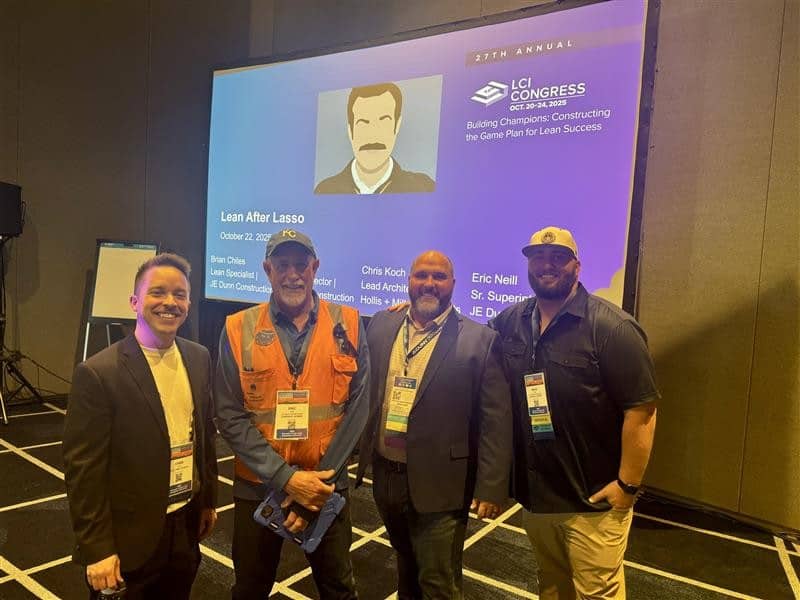
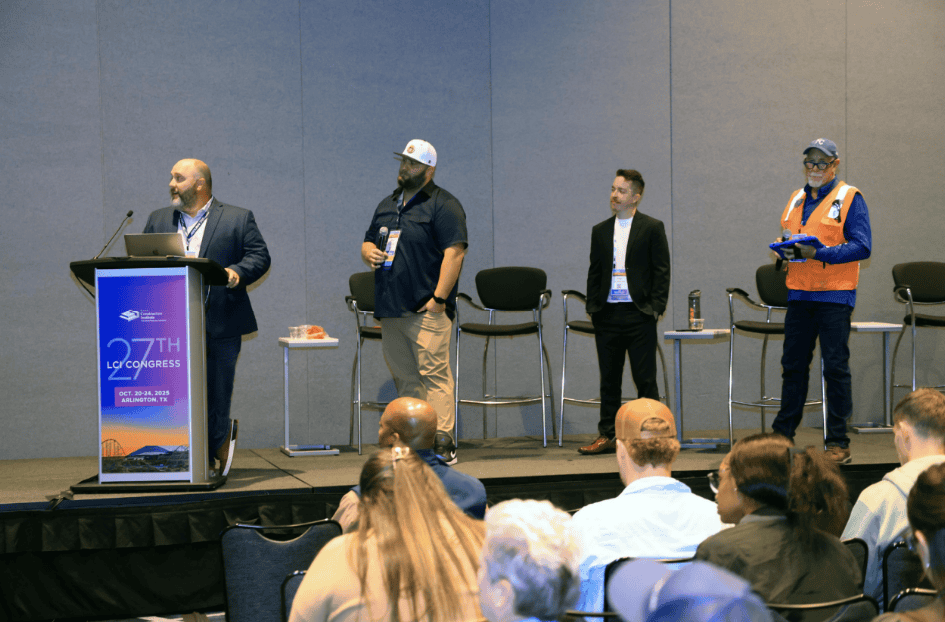
Special thanks to Brian Chiles, Lean Specialist at JE Dunn Construction; Eric Neill, Sr. Superintendent at JE Dunn Construction; and Chris Koch, Lead Architect at Hollis + Miller Architects for helping me tell this story at Lean Construction Institute’s (LCI’s) Annual Congress in 2025. You are the best “Beards” a guy could ask for!
Would you like to hear this presentation? Stay tuned on our LinkedIn page for when the full LCI presentation will be re-presented during our next Lunch ‘n Lean event with the KC Lean CoP in January 2026.