


Mitigating Labor Risk Can Make a Project More Viable in New Ways
insights
The construction industry enters 2026 facing a persistent shortfall of approximately 500,000 workers1. While this has long been a headache for construction executives (just ask anyone in HR), it has officially crossed over into a primary concern for lenders. In their 2026 Global construction Outlook, “strategic innovation to mitigate labor challenges” as a key factor that will determine whether a firm maintains a supportive credit rating this year. In today’s debt market, the “Labor Pipeline” is being scrutinized with the same intensity as the “Project Pipeline.”
Modern underwriters are no longer satisfied with just seeing a signed contract; they want to see the “boots on the ground” strategy. Lenders are increasingly factoring workforce stability into their risk assessments. HUB International’s 2026 Profitability & Resiliency Survey found that 45% of contractors attribute project delays directly to worker shortages. Consequently, lenders are now requiring higher equity contributions and larger contingency reserves for firms that cannot prove a stable labor pipeline.
Metrics such as employee retention rates, the ratio of apprentices to journeymen, and the presence of long-term labor agreements are now being used to determine the viability of a loan. The logic is pretty straightforward: if you can’t staff the project, you can’t finish it, and if you can’t finish it, you can’t service the debt.
To combat this, firms are using the resurgence in the debt market to fund capital expenditures that reduce labor dependency. This includes:
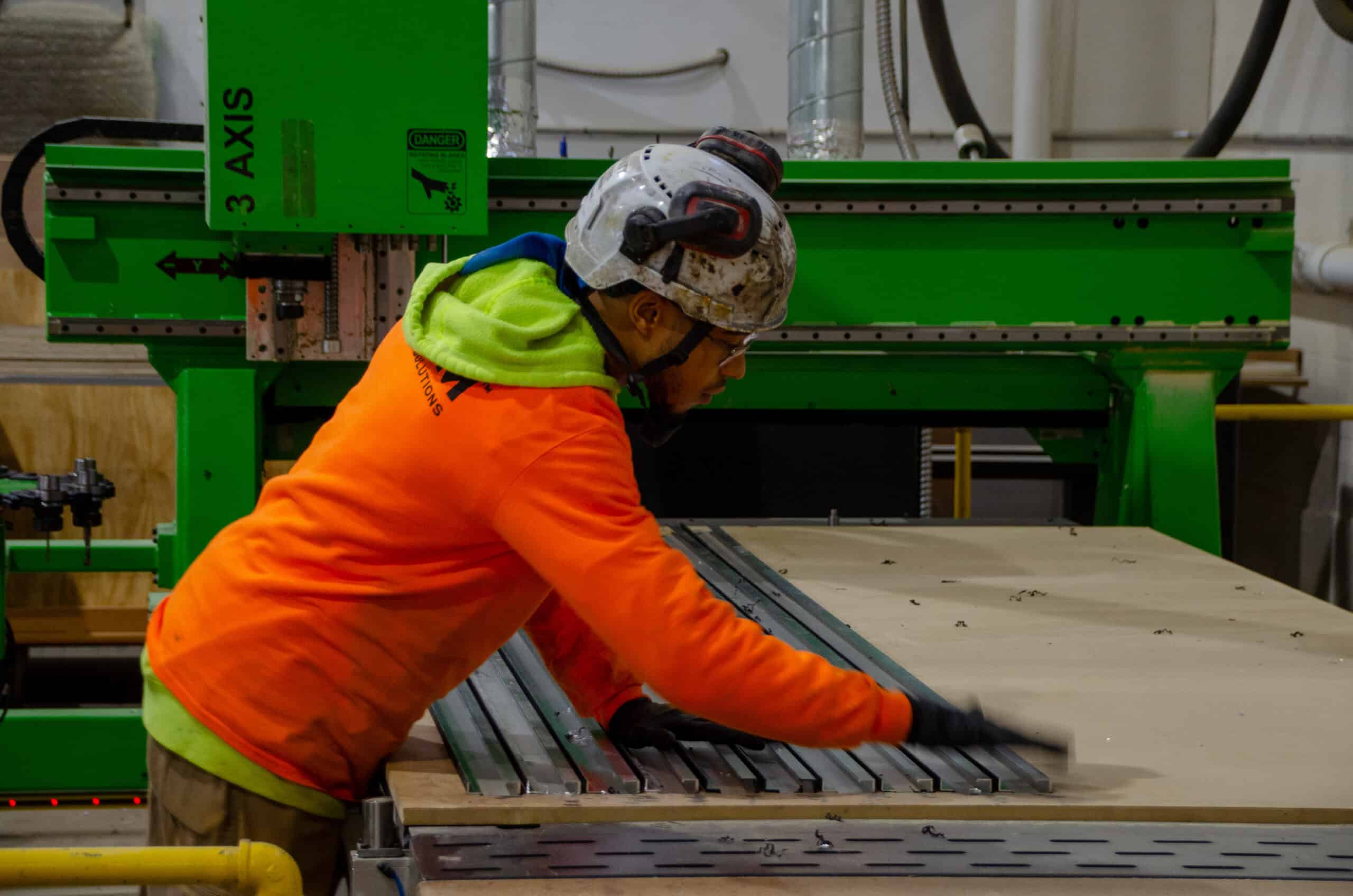
- Off-site Modular Construction: Moving labor into a controlled factory environment to increase predictability and decrease uncertainty.
- Robotics and Automation: Debt-funded investments in layout robots and automated masonry systems to act as “force multipliers” for existing crews.
According to a January 2026 industry survey, 91% of construction and engineering firms plan to invest in industrial AI, automation, and robotics this year to address labor shortages2. Establishing internal trade schools or partnering with vocational colleges is increasingly seen as a “de-risking” activity that justifies better borrowing terms.
Ready to Work With Us?
contact us
Economic Webinar