


How We Operate, Measure, and Lead Responsibly
Sustainability is more than a goal — it’s an opportunity to deliver long-term value for our clients while doing the right thing for the environment. Our approach is grounded in practical, project-based actions that reduce risk, improve efficiency, and create measurable impact.
We go where our clients take us, aligning with their sustainability objectives and collaborating with design and trade partners to turn innovative ideas into achievable solutions. By leading with practical expertise, we balance constructability, lifecycle cost, and energy use across every project. This client-driven approach informs how we conduct business and shapes our broader strategies.

Our approach to sustainability is shaped by how we operate, measure, and lead. It is grounded in doing the right thing while supporting our clients on their journey. As client expectations evolve, sustainability is increasingly tied to project performance, risk management, and long-term value.
Innovation is driven by real project needs. Clients are asking for more detailed carbon tracking, material transparency, and measurable outcomes. In response, JE Dunn is advancing how we evaluate materials, refine specifications, and partner across the supply chain to deliver solutions that meet these requirements.
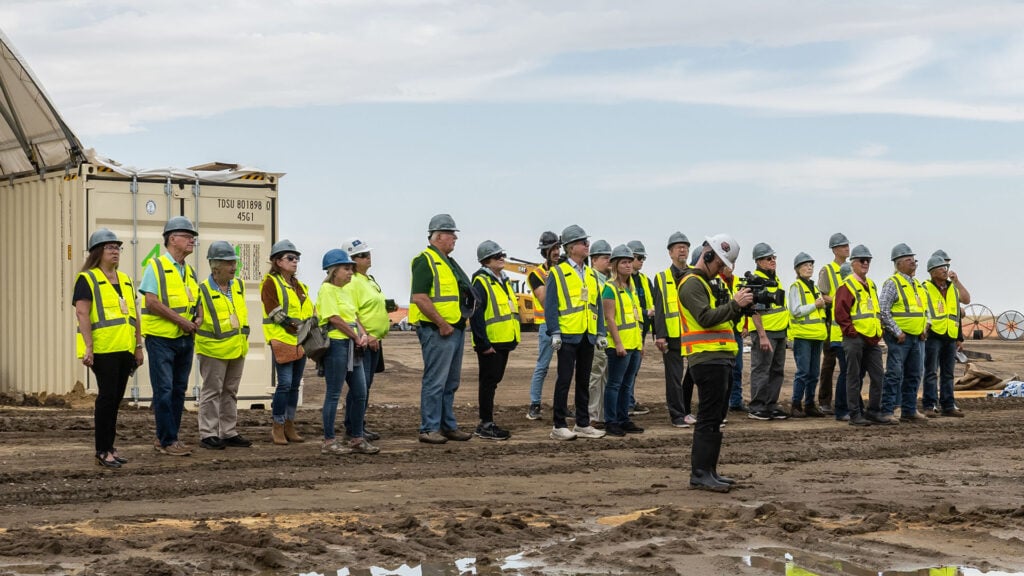

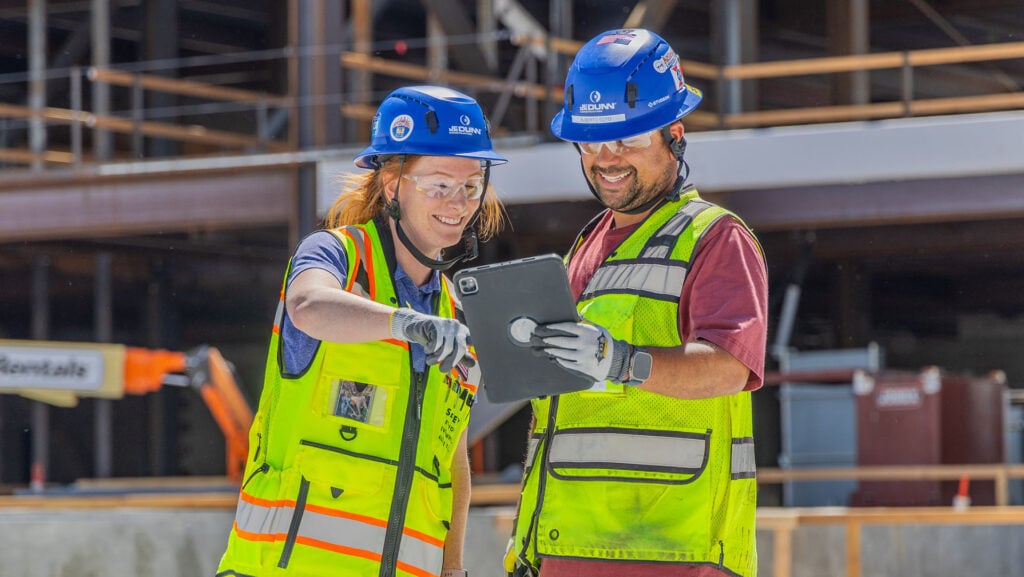
Technology plays a key role in this progress. Through partnerships such as our work with Trimble, we are improving planning accuracy and execution, reducing rework, and increasing certainty in how projects are delivered. These tools, combined with strategies like prefabrication and sustainable procurement, help reduce waste, improve efficiency, and lower environmental impact.
On select projects, these efforts are delivering measurable results. For example, the use of low-carbon concrete and optimized mix designs has reduced embodied carbon in certain materials by up to 25%. Solutions like battery energy storage systems (BESS) and responsible material sourcing further support cleaner, more efficient jobsites.
Sustainability at JE Dunn is led with a focus on accountability, practicality, and alignment with client goals. As Environmental and Sustainability Director, Julianne Laue brings more than 25 years of experience across design, operations, and construction to guide this work.
Over the past year, Julianne has led JE Dunn through a dynamic and uncertain sustainability landscape. While federal requirements have shifted, many clients have continued to raise the bar, particularly in sectors with complex performance and reporting needs. This environment has created new opportunities to innovate.
Julianne works closely with project teams, clients, and partners to translate sustainability goals into clear, achievable strategies. This includes supporting carbon tracking and reporting requirements, guiding material selection, and identifying opportunities to reduce environmental impact while maintaining constructability and cost alignment.
Her leadership also extends to building capability across the company. Julianne has overseen a renewed commitment to sustainability training and expertise, expanding access to third-party certifications such as LEED and Living Building Challenge (LBC), and supporting employee-owners in developing the skills needed to meet evolving client expectations.
Partnership remains central to this work. By collaborating with industry partners and listening to clients, Julianne helps position JE Dunn as a trusted partner that can turn sustainability requirements into measurable results across projects.
“Sustainability challenges us to think differently and continuously improve how we build through smarter materials, emerging technologies, alternative fuels, and more efficient delivery. At JE Dunn, we approach sustainability as a catalyst for better outcomes — enhancing the human experience and creating long-term value for our clients, our projects, and the environment. When these ideas are integrated into our projects and our business, they fundamentally shape how we define quality, performance, and long-term value in the built environment.”


“Advancing sustainability in the construction industry — particularly in addressing embodied carbon — requires a collective effort. No single individual can drive this work alone. Progress depends on contributions across the project team, from engaging with concrete suppliers on available mix options, to evaluating equipment choices, to collecting and analyzing data to understand project performance. Each role plays a part in creating incremental, meaningful improvement.”

JE Dunn’s governance framework, overseen by our Board of Directors, is designed to promote consistency, accountability, and regulatory compliance across the organization. Policy oversight is managed through a centralized Policy Management Committee, which is responsible for the development, review, approval, and communication of company policies. The committee meets quarterly and works in close coordination with Legal, Human Resources, Risk, Business Operations leadership, and Payroll to ensure policies align with applicable laws, employment practices, and regulatory requirements.
Regulatory compliance is supported through cross‑functional collaboration, with a Regulatory Compliance Committee that meets quarterly and includes Legal and Compliance working closely with HR and Payroll to monitor regulatory developments, manage compliance obligations, and provide guidance across the organization. This structure supports clear ownership, disciplined oversight, and transparent communication of expectations.
Ethical oversight at JE Dunn is led by the Legal and Compliance functions, including the Chief Legal Officer, which are responsible for administering the company’s ethics and compliance program. JE Dunn maintains a comprehensive Code of Business Ethics and Conduct, supported by required training and established processes for reviewing and addressing reported concerns.
JE Dunn provides multiple channels for raising ethics or compliance concerns, including external‑facing and internal reporting options available through the company website, internal platforms, and direct reporting mechanisms. These options include phone, email, and electronic reporting tools, ensuring concerns can be raised in a manner that is accessible and appropriate.
This approach reinforces JE Dunn’s commitment to integrity, accountability, and responsible business practices and provides employees and external stakeholders with clear avenues to raise questions or concerns without fear of retaliation.
The following governance-related disciplines are led by subject matter experts within the organization.
Quality is not owned by one team or checked at the end of a project. Quality is embedded in our culture and shared across every role, phase, and project. It reflects our commitment to our guiding principle of doing the right thing, even when it requires additional scrutiny and collaboration upfront to achieve the best long-term outcome.
That mindset dates back to the 1960s, when three JE Dunn employees reviewing a senior living project identified critical issues within the original structural design. Their willingness to question the plans and conduct an additional review established what would become a foundational JE Dunn practice: peer reviews. At a time when independent constructability reviews were uncommon, that extra layer of diligence helped ensure the building would safely stand the test of time.
Today, that same spirit of accountability shapes our “Focus 4 Quality” framework: constructability and third-party peer reviews, pre-installation meetings, mockups, and first work-in-place inspections. These practices are integrated early in project planning to align teams around expectations, sequencing, performance standards, and execution before work begins in the field.
Our approach is intentionally proactive. By identifying and resolving issues early, teams help protect schedule, budget, and project outcomes while reducing avoidable rework. More importantly, it reinforces that quality is everyone’s responsibility.
Safety is our top priority on jobsites and in offices from coast to coast. JE Dunn’s guiding principles of families first and well-being shape how we approach every job, every environment, and every decision. Our goal is simple: Send people home in the same condition they arrived.
That commitment is supported by robust safety training, consistent field engagement, and a culture where everyone is empowered to speak up when something does not look right. All JE Dunn employees complete required annual safety training in addition to ongoing monthly learning opportunities focused on jobsite awareness, risk identification, and continuous improvement.
We believe safety is more than compliance. It requires accountability at every level of the organization and active participation from every person on site. JE Dunn supports our trade partners with the resources and support they need to understand our safety culture and bring best practices to future jobs. Reinforcing open communication, shared responsibility, and proactive planning creates environments where people can perform their best work safely.
JE Dunn’s risk management approach is designed to proactively identify, assess, and mitigate risks throughout the lifecycle of construction projects. Emphasizing a culture of safety and accountability ensures that risk management is seamlessly integrated into every phase of a project, from preconstruction to project closeout. JE Dunn utilizes a comprehensive risk assessment process that includes regular reviews, input from stakeholders, and the use of advanced technology to track and monitor potential hazards.
JE Dunn’s mitigation strategy is layered — combining preventative measures, contingency planning, and ongoing monitoring. Our Risk Management team uses specialized software to track risk indicators and general real-time reports.
The team leverages internal tools and processes to protect the company and create opportunities for growth. This includes our internal Trade Partner prequalification system (TradeTapp), and our licensed bonding agency (William Henry Agency) for project bond needs.
Fill out the form to receive The Look Ahead, JE Dunn’s quarterly economic report.
